
Time to Change Tactics: An Open Letter to the French Student Movement
by Stephanie Van Hook
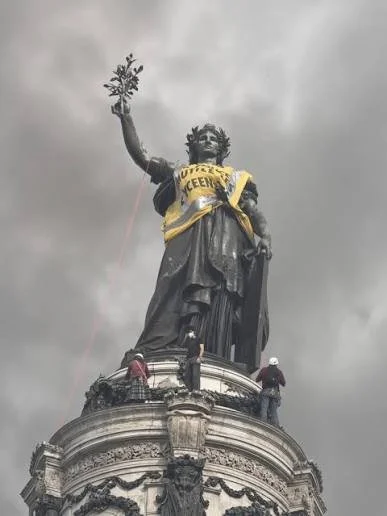
Marianne, symbol of the French Republic.
Like many others around the world, I’ve been following the French students’ movement, impressed by the maturity and solidarity of the students but also with a deep caution due to images of destructive violence that betray the movement’s goals. So when I woke up on October 18, one day after the National Day of Protest, to images of graffiti, looted stores, broken windows on small businesses, small business owner injuries, fires and more, I was concerned. As a nonviolence educator, I'm painfully aware of how the media is biased towards violent action and so it took a lot more research in the international press to have a wider view of the situation: French police using rubber bullets, tear gas, and other extreme methods to respond to the very legitimate movement for systemic change and improved school funding that the students of France have mounted.
With even more specific research—not something that is or should be expected from your average news consumer—I was able to find that student unions are trying to distance themselves from the violence and property destruction that groups they call casseurs (wreckers) are meting out during the protests. But regarding the frustration from the students that there's undue attention on the casseurs' impact instead of the demands of the movement, I respectfully disagree. The destruction is too widespread and has escalated too far to try to claim that it's a media-induced distraction from the movement's goals. It has unfortunately inserted itself as a primary problem, however unwelcome. One suggestion I'd like to offer is that the students change tactics now. If these casseurs are truly not part of the movement, you could move out of public streets, away from direct confrontation and protest, instead committing the movement to a period of constructive program; the confusion can thus be lifted between those who support the movement and those who are mere provocateurs.
For example, you can return to study, in the open air as well as online spaces, but with democracy schools where you study movement strategies, nonviolence, and even, if you want, create spaces to continue your preparation for your national exams. Many schools in France are named after the American civil rights activist Rosa Parks! Capitalize on that. Instead of destroying schools and building barricades around them, fill the schools. If something is broken, fix it. Open school kitchens, libraries, sports facilities. Show people that there's another way of operating instead of imitating and even escalating past movements’ violence. The concern is that with the Far Right's grab for power in France at the moment, they'll use these protest movements to generate more regulations on social protest spaces and, as is clear already, scapegoat the recent and not-recent immigrant populations as those to blame for the destruction. Students—and everyone else—can find ways to care for and protect immigrants during this trying period.
To be able to change tactics is a sign of strength of a movement, not a concession. You can do more to keep the movement disciplined and effective when you do not over-rely on a single method of action. And at this time, you have a lot of work to do to reclaim the upper hand in the media’s narrative and regain the general public's trust in the capacity of your movement to achieve its goals without resorting to the violence of those who want to see you fail.