
What Neuroscience and Nonviolence Teach Us About Being Human
In this episode of Nonviolence Radio, we begin with a wide-ranging conversation with neuroscientist Marco Iacoboni, whose research on mirror neurons and empathy has helped deepen our understanding of how human beings connect, imitate, and influence one another.
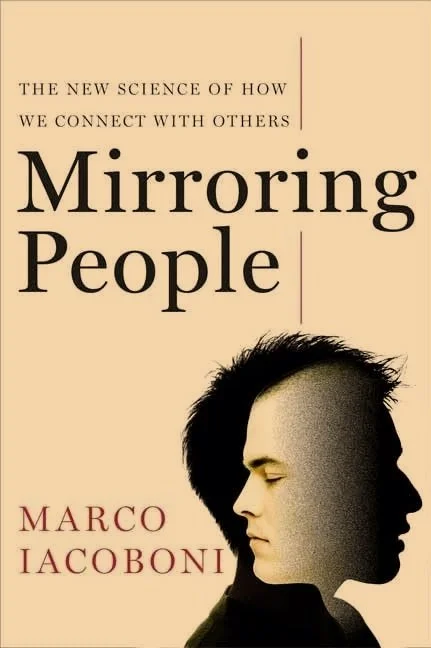
Dr. Iacoboni explores both the promise and the limits of empathy, including what he calls its “dark side” — the way emotional contagion, in-group identification, and imitation can sometimes contribute to polarization and violence rather than prevent it. He also points toward hope in the brain’s plasticity and in simple, everyday practices that reconnect us to one another’s shared humanity.
From there, we turn to Martin Luther King Jr.’s sermon “Love Your Enemy,” a powerful reminder that nonviolence is not passive feeling, but a disciplined practice that calls us to rise above instinctive retaliation and respond with courage, restraint, and love.
The episode concludes with Michael’s Nonviolence Report, offering reflections on current events and the ongoing relevance of nonviolence in a world marked by fear, division, and rising authoritarianism.
Together, these segments invite listeners to consider how understanding ourselves — scientifically, morally, and practically — can support the urgent work of ending violence.
Show Transcript:
Transcript provided by Elizabeth High. We are grateful!
Stephanie Van Hook: Greetings and good morning, everybody. Welcome to another episode of Nonviolence Radio. I'm your host, Stephanie Van Hook, and I'm here in the studio with my co-host and news anchor of the Nonviolence Report, Michael Nagler, and we're from the Metta Center for Nonviolence in Petaluma, California. On today's show, we're going to explore the science of nonviolence and the relevance of the science of nonviolence to current politics and to our sense of who we are as people, because this is really part of the work of Nonviolence Radio; that we try to convey new information to our listeners that shapes the way that we think about ourselves and we think about our capacity for nonviolence.
And our guest today is neuroscientist Marco Iacoboni. Dr. Iacoboni is working down at UCLA. He has a wonderful book called Mirroring People. And he is well known for the research on mirror neurons, which we'll get into in a little bit. Michael, I first learned about mirror neurons at the Metta Center in my work in nonviolence. And from you. I know that you learned about them from a German colleague. But there was also a fellow, Ramachandran, I believe, who was calling them Gandhi neurons. And I'd love to hear from you first about the importance of these scientific discoveries and these scientific findings for our understanding of nonviolence.
Michael Nagler: Good question, Stephanie. Yeah, I would say the importance of it is kind of relative, because for someone like me, I didn't need scientific evidence. But a lot of people do. And a colleague of mine at Berkeley, Willis Harman, who was a regent of the university and a good friend, he used to say, "science is the knowledge-validating system of our civilization," so if something isn't scientific, it isn't true. So for many people, it's critical that there be an actual scientific pathway in the body. to respond to impulses of nonviolence.
Stephanie: Yeah. Well, I want to say something about that, though, because I know that when the 50s came around, especially with this golden age of marketing and golden age of science, like everything all of a sudden became chemicals and science, backed by science, and science now says "you don't need this other way of being. You no longer need to be smelly or dirty," or whatever the things you used to be are, "you can use these chemicals backed by science." And so I'm always interested in how we say it's this kind of knowledge-validating system because I also see that connection to the 50s, you know, when people would say, "oh, you know, this is science-based research that is going to make your life better through science." You know where I'm going with that?
Michael: I do know where you're going with it. It's a valid truth being abused. And I've noticed how many advertisements these days say "this product is scientifically proven to be blah, blah." And everyone passing that ad and reading it knows perfectly well there was no scientific evidence, there was no experiment. Come on.
Stephanie: So in that way, the knowledge-validating system is very different than the advertisement of science as such. And I think that we see that too in the science of nonviolence, especially in quantum theory and quantum mechanics, everyone's saying, well, the quantum way to make friends or the quantum way to have a partner. I don't want to go into all the quantum ways. It's kind of baloney, all of that. We're not talking about that.
Michael: We are not talking about that at the Metta Center, guaranteed.
Stephanie: What you're saying, though, is that there are findings that somehow show that, okay, the human being is different than what the image of industrial society has made us out to be; that we have empathy, especially mirror neurons and the processes of mirror neurons emphasize our capacity for empathy and compassion.
Michael: And it was important to show that empathy was built into our physical being. Like I say, a lot of people, you know, maybe didn't need that, but other people did. And we needed to show that evolution was not the kind of pseudo-Darwinian struggle it had been taken to be. And we were not separate materialistic competitors. But even on the physical level, even on the material level, there were pathways built in for responses. And there's evidence for this coming from every direction. We now have seemingly a consensus that Neanderthals lost and we won because they weren't as social. So being wired for empathy, I don't like using that phrase because I don't think of myself as a circuit board. But there is an analogy, and not more than that, between a neuron and a wire. They both conduct electrical impulses, but one is alive and the other is not.
Stephanie: These metaphors that we live by, as Lakoff and Johnson call them, where the human being is not a machine, and that machine thinking is also part of the story of humanity that we are trying to change. That said, our guest today does go into his worldview that he's a materialist in science and that he believes that we are the body, which, in the end, it's important to explore different worldviews and also to understand that while neuroscience can help explain how empathy works, nonviolence traditions help teach us what to do with it, that we end up landing together and dovetailing very beautifully.
Michael: The classic difference in approach is to say that because we have certain structures in the brain, we have certain consciousness. And I'm one who believes that it's exactly the other way around, that because we have consciousness, that consciousness has created pathways to express itself in the human world.
Stephanie: Well, it makes for a good conversation, Michael, between people. So today on Nonviolence Radio, we're joined by neuroscientist Dr. Marco Iacoboni, whose work on mirror neurons and empathy has shaped how many of us think about human connection at a very basic and embodied level. And in this conversation, we look at empathy and we look at it honestly as something that is complex, not just a positive thing, because Iacoboni talks about what he calls, "the dark side of empathy," which you'll hear about. And it's the way that the same mechanisms that allow us to feel with others can also reinforce in-group identities, spread fear, and contribute to cycles of violence, right? This is the same mechanism, positive sense of empathy. Also, there's a dark side of it. And he reflects in this interview on the contagion of emotions, how imitation works, and also how easily societies can get swept up in harmful patterns, especially in times like these. And at the same time, he points towards something hopeful, which is plasticity, which you'll hear more about. And that's the fact that we're not fixed and that both brains and societies can change. And what I really appreciated in our conversation with Iacoboni, we just sort of threw questions at him and he answered for us, which was really fun, was that he gives us some practices of how to engage with that plasticity toward the more positive side of empathy through simple grounded practices like eye contact, kindness and attention. And these are practices that can reconnect us to one another's humanity and interrupt violent escalation. So whatever our standing points are, there's a strong shared ground here that if we want to end violence, we have to understand ourselves better and that we have to practice being human differently. So I'm very happy to share this interview with you today. Let's tune in.
Michael: Marco, it's been about 10 years, I think, since we spoke with you before. Has there been significant progress in, say, the neuroanatomy of mirror neurons or neurophysiology?
Dr. Marco Iacoboni: That's a great question. I think that a lot of the concepts were already kind of in place a few years after we started working on the system. Because, you know, we are a good group of very sophisticated neuroscientists. We just don't, you know, get stuck with just one discovery. And we thought, okay, this is a system that is probably very flexible and plastic, because that's what we know about the human brain. It's way more plastic. When I studied medicine 40 years ago, the notion was that, you hit 25, you can only lose neurons and connections. Now we know it's not true.
Michael: You can imagine I studied medicine a long time ago. That dogma was very much in place back then.
Dr Iacoboni: Exactly. So we think also that the experiences that people have also shape the way they can actually use mirroring. Mirroring is more like a function than a neuron in itself. I mean, neurons need to implement the function for sure. So some neurons do, some neurons don't. But we have, you know, that was done already many years ago that we discovered mirroring for many different things, for pain, for other things. And I think that what happened was that in the last 10 years, we were kind of having a more sophisticated way of thinking about this whole mechanism of mirroring the brain system may be associated with it. And that's what people, I think people that are outside this field, I still feel that they don't get it, that they're stuck with the notion that you get the mirror neuron here, how does it do all these things? It's more like, again, a way of functioning. And providing us the capacity to understand our minds, understand emotions, connect with others' emotional or body level, all these kinds of things.
And it's also part of the self. I mean, now we're doing studies on body, motion and self. And I had this wonderful postdoc, Dr. Akila Kadambi, who's doing great work on it. And from the get-go, we had some notion that, you know, mirroring and empathy itself were sort of related. We were doing more work on that, also trying to explore things like virtual reality to see whether we can change some really deeply entrenched attitudes. So you know that, you know, with the implicit attitude test, we can see whether people, even the most liberal people, may have some prejudice toward people that don't look like them. And we're doing studies in which what we do is we capture the biological motion of participants, asking them to make very simple actions. We film those actions. Then we reduce those actions to just like white dots that move around on a black background. It's called point light display. And when you do that, even though you don't see a human being making an action, you recognize the action, okay? Humans do fairly easily. I mean, not 100%, but fairly easy. But what's interesting is that if I ask you to come to the lab and I film you, and then I show you some actions, different kinds of actions. And I don't ask you simply to recognize the action, but I'm telling you, look, these actions may be performed by you or by Marco or by Stefan. You need to figure out, you need to tell me, is that you or not you? Look, humans are actually really doing well enough. They're well above chance. So we recognize our own point light displays of our own actions, even though we don't look at our own actions in motion, right? And so we think it has to do more with proprioception, with motor memory, that kind of stuff. But it also has to do with self. Because the self is deeply entrenched in the body. We are our bodies. And so that's the kind of strategy we're doing now to expand on this notion that it's just don't take it as a fixed thing, it's a function. Of course, the function needs to be implemented by the brain because it doesn't come out of nowhere. It's more like a function.
Michael: I'm getting the impression, that was fascinating, by the way, I'm getting the impression that your fundamental understanding of the relationship of mind, brain, and consciousness, or soul, perhaps, has not fundamentally altered in the last 10 years.
Dr Iocoboni: Yeah, I see that on a very old website, but my bio blurb in the website is still very famous. People still cite it. It starts with, "I don't give a damn about the brain. I hate the human soul." And I'm a complete materialist in the sense that I don't believe in the soul as a separate entity. But I think that we can actually use the soul as a metaphor for how humans go through life and experience emotions and relate to other people, these kinds of things. So that's why I think, you know, yeah, the soul is important too.
Michael: Now, in the last 20 years or so, speaking as an amateur, I think from the outside, in the last 20 years or so, it seems to me there's been a great deal of interest in and research on consciousness as a topic. I remember when I first brought up the question of consciousness at a luncheon with some colleagues at Berkeley, this is awhile ago, they wanted to push me out of the room. They said, "you can't define it, so we're not going to study it." But things I think have gotten much more cogent and much more helpful since then. Is that your impression also?
Dr Iacoboni: Well, okay, so I think people try to study consciousness for a long time. You know, the bar was very high. I mean, the idea was, you really need to pinpoint a brain region that does those things. And that's also kind of a silly way of framing the whole question. But yeah, I think this, well, Templeton funded this large study between two multicenter groups that were competing on different ideas about consciousness. And, you know, actually, it was a cool idea. Let's fund empirical research to see which one of these theories is correct. And not surprisingly, it's kind of middle of the road, there's some findings that support one theory, some findings support another one, some findings disapprove their theory, and some others disapprove the other theory. Because theories tend to be so nicely organized, because that's the way we think about theories. And the brain is more complex than that. The brain doesn't give a damn about our own theories.
But yeah, it's always a fascinating topic. I've been teaching for grad students in neuroscience a course called Systems Neuroscience, and we have three professors, and I teach the cognitive module. And for many years, actually, I wasn't teaching consciousness at all. And then one year, I told the chair of the course, "I'm going to teach. I'm going to do a whole class of consciousness." And then one of mine was like, "you're brave." The nice thing about it is now we have theories that can be reduced to brain systems. So in that sense, it's a good way for people to study neuroscience and maybe to convey different things to have a sense that you can actually talk about something so incorporeal in a way, but you can still manage to make sense of it by using information theory, systems, that kind of stuff. That's what I like about it. And I think it's doable that way. There are probably many kinds of brain scientists. But I'd say that there's less of a taboo to talk about consciousness. And the neural correlates of consciousness.
Michael: When we spoke before, you were already talking about, in your famous interview with the Dalai Lama, you cited how helpful it might be to recognize, for example, that we all have mirror neurons and can respond to one another empathically. Have you gone further in that direction? Is there more neuroscience that is telling us things that are good for us to know in terms of overcoming alienation?
Dr Iacoboni: Well, first of all, we did studies on empathy and looking into regions of the brain that actually are relevant to empathy, seeing someone in pain, there are brain responses, and some of those have to do with also metering. And then we also intervene on those in the sense that we were asking people to play an economic game, which is mostly a generous sort of game. We were using brain stimulation to see whether the region they were showing this sort of empathic response. Stimulating those regions, we would change the level of empathy and generosity of the participants. We even showed that. So we made it very tractable in a way. It's still a very complex thing.
It really depends on the various scenarios in which people are... I can see there's also a breakdown in that. I mean, in my book, I also talk about the dark side of empathy, the fact that we actually are also capturing negative emotions. And if I look at the news, especially in the US these days, things are so bad, are so horrible, and I can see that, you know, there may be some level of contagious violence, the propensity to violence. There's also some kind of a top-down effect. Also, I never heard there were two words, Proud Boys, anymore. Is it possible that those Proud Boys are not all ICE agents? I'm thinking about it. It could well be. But yeah, there's also a breakdown of empathy. And that's the thing.
We're also in kind of a historic cycle now. I was born in 1960 in Italy. And in my teens, I was thinking awhile, and I was studying history, I was thinking, "hey, we're never going to go back to Nazism and fascism. Those days were crazy." Now we know better, and here we are again. We are almost back to then. So there's kind of a cyclical thing in human history that kind of also affects all of our emotions and our emotions certainly are contagious and we tend to be in a way affected by those. One way to try to extract yourself from the madness, it's also to keep your sort of Zen attitude and to realize that things, there are important things that are more important than being swept in the moment. But yeah, I can actually, that's why one of the reasons why I don't even, I mean, people are obsessed by these videos and those videos are horrible. They're clearly, in my opinion, showing murder, right there. But I don't obsess on those. I don't dwell on those. I don't watch them. I watch them once and I say, "okay, that's enough for me. I don't need to keep watching it, to analyze it in detail. I know what happened." And we should really find a way of reminding ourselves we are all human beings. We are here for a short time. We should help each other. If I think about the history of mankind, there are so many, there's so much violence. Why? Why are we doing this? It's so much better not to hurt each other, but to love each other, to help each other. It's really just for a short time. Let's make the best of it, not the worst of it.
Michael: I know that to some extent, that impression that history is a history of violence, tout court, that there's nothing else, is an artifact of the way we study history.
Dr Iacoboni: Absolutely, yeah. Because we've got history on the political level, the history of customs and how people think, how they change the way they operate, or the history of medical achievements, you know. And then 50 years ago, life expectancy was like half of what we live now. So these are all good things.
Michael: Yeah. Would you agree with the statement, or would you find that it's too simplistic, namely that we are wired for empathy?
Dr Iacoboni: I don't disagree at all. I think it's still wired for empathy. But again, there's also the dark side of it. I think the same mechanism that makes us wired for empathy can make us become violent.
Michael: In other words, we are imitative…
Dr Iacoboni: We capture emotions like we capture viruses.
Michael: So everything depends on whether we have the judgment to discriminate.
Dr Iacoboni: Exactly. That's why you also need kind of control because emotions are great, but you need also to keep your control. Otherwise, you're going to be swept up by the emotions.
Stephanie: How has this current administration impacted your work in science and even funding in science? Can you speak to that?
Dr Iacoboni: I mean, I don't want to talk about the grand proposal. We had a fantastic grand proposal on something very specific that doesn't have a cure yet. And we have preliminary data that suggests we can actually help these people. It's straightforward. We send the proposal in. We think it's a slam dunk. It's a long process before you get in to do an early stage clinical trial, then you have to do a larger clinical trial. But we had this thing, and just like we sent it last February, and in between our submission and getting reviewed, they changed all the satisfaction criteria. They revamped it all. And when I look at the roster of the people that were going to review our proposal, I thought, we're not going to even get scored, which means not discussed, here on the bottom, because these people have no expertise for the kind of stuff we're proposing. And I don't even know why they're actually evaluating them. That's exactly what happened. Then we talked to POs and the POs that, mental health and neurological disorders, they told us, "OK, you need to wait because it's all a mess; a lot of proposals didn't get scored and we're going to have to reorganize ourselves. Your proposal sounds great, I would suggest you to wait a little, do not even resubmit until June of this year," which I'm hoping that we'll be able to submit. We're going to talk to them but the idea is to do it. So there's a tangible…, and I know a lot of people on campus that had to fire people from their labs because they didn't have the funding.
Stephanie: I'm really sorry to hear about that because this is a direct attack. This is the rise of authoritarianism and the downgrading of science.
Dr Iacoboni: Oh, yeah. It's all planned. I mean, it's part of the whole project.
Stephanie: What's the connection?
Dr Iacoboni: Well, I haven't read Project 2025, but the few things that I've read, they're incredibly psychotic.
Stephanie: Can we talk a little bit about that psychotic nature of authoritarians as we see here in the U.S., but we see in other countries as well? Your research might give us insight into better understanding somebody who seems to have very little empathy being such a charismatic figure as well that people then identify, I imagine this is the dark side of empathy, but help us to understand that a little bit more from your scientific background. What do you see happening?
Dr Iacoboni: Yeah, well, if I have to make sense of it, and sometimes I ponder, how is it possible? How is it possible that the leaders of the world, in my opinion, among the worst individuals that we have in our humanity? I think it's because, again, there's some mechanism of having some prejudice, some strong beliefs, some... It comes from your own experience in life, whatever it is. And those things at some point start to snowball and to be contagious. Because they're also linked to emotions. Sociopaths and psychopaths, they also have emotions. They have very different kinds of emotions. It's a whole different armamentarium of emotions. But they have those tools. And so it snowballs and becomes more and more prevalent in even in democratic societies and unbelievably what happened is that a lot of people tend to vote for people that if I look at them, "okay this is definitely I may not like that guy but this guy is so dangerous that I should vote that guy no matter what,"and then the risk is that you may not have an election anymore because frankly in this country that risk is very tangible.
Stephanie: And how does this impact our understanding of human nature as well? I think of the large display of lack of empathy. And then as you're talking about our capacity for our natural capacity for imitation. Are we on a downhill slide?
Dr Iacoboni: It's also part of it. Unless we think about the individual psychopath or sociopath that operates by himself or herself, most of these things happening still happen in groups. So there is some kind of a sort of in-group empathy for people, even among ICE agents, I would assume, that they feel they belong to a family of some sort. And that family is actually in a way in which they have to behave that way. And that reinforces the sense of solidarity among themselves. So the mechanics can be fairly human in a way, but then it induces things that are fairly inhuman.
Stephanie: I've heard immunologists talk about our immune system and there's these metaphors from our experiences as human beings that they then draw into how the immune system works. And it helps us to better understand, like we have these little soldiers and they're reporting information and they're going to attack. And I know that the brain is an extremely beautiful space for metaphor as well. And I wonder what kind of metaphors you see that might help us to better understand what's happening in society as you look at the brain itself? What's happening in the brain that could be a metaphor for better understanding ourselves as a society?
Dr Iacoboni: That's such a great question. I think if I have to think about it, my immediate reaction is that, well, plasticity, our different brain systems and individual cells reorganize themselves. So that could explain also this, you know, this watching and waging of violence and the things that we're experiencing now. And so through plastic rearrangement, things in societies can also change. And that's the thing that happens. In the brain, it happens for reasons that tend to solve problems like having an injury and then I'm not able to do something. How do I fix that? By using other resources that are intact, not hit by the injury. And I adopt and use those resources to do things in a different way, but still able to accomplish my goals and to achieve my goals.
Stephanie: I like that. I like drawing upon this idea of this reality of plasticity because it also, there's a sign of hope and we do like to have some signs of hope that things can change. Going back to plasticity, what kinds of practices can people do that can help increase positive empathy instead of the dark side of empathy. What would you recommend that somebody who wants to make a social change be doing from a brain scientist perspective?
Dr Iacoboni: Well, one thing to do is acts of kindness. Be kind to other people. Even a very simple thing like, you know, someone makes a coffee for you, just ordered an espresso at a bar. You just be thankful and you look the person in the eye. You train yourself to really connect with others for simple gestures because those are the things that unite all of us. We all have to eat and breathe and sleep and drink. So those simple things are the way we can actually reconnect with other human beings. Without talking about the high ideas, let's talk about the simple life of human beings, our human condition.
Michael: What happens when we do those even physical acts like making eye contact and then follow it up with using our imaginations is that we see the humanity of the other. And that humanity of the other is identical with our own humanity, and that defuses hostility and alienation.
Dr Iacoboni: Right, exactly, exactly. So that can happen even for people that, you know, now at the moment, I would think would not have any sort of empathy, but I'm pretty sure if I actually meet that person and talk to that person, there is humanity there too. And we need to actually just steer the mind away from violence and toward empathy and compassion.
Stephanie: What books or resources do you recommend for people with zero background in mirror neurons, brain science, to start learning about themselves? This is part of us, right? So to know about it is empowering. Do you have any recommendations or are you just working at such a level that it's hard to...
Dr Iacoboni: Well, okay. So I would say, first of all, it's my book, but I tried to write a book that is very accessible for people that don't really know the brain and also make it about the human beings that did the science. I start talking about the neuroscientists that discovered the cells in the monkey brain. And then chapter by chapter, if you notice, I talked about the grad students in my lab doing the work. So I describe them, I tell them. That's one aspect of just looking into books that are also showing the human aspect of empathy and of neuroscience. And I'd say, I tried to write my book that way. Also because I like literature. I think about my book almost as a story. So that would be one. But if I had to go, if I had to say something in the history of mankind; let's go back to the Stoics. The Stoics are considered these very frigid sort of human beings, but they were not. They were really thinking about other people and being compassionate. I keep reading the meditations of Marcus Aurelius because they're so nice. There's plenty of really wisdom there. Let's go back to those guys.
Michael: You put me back in business. I taught classics for decades at Berkeley, from Homer on up. And I'm so glad to hear you saying that, because in so many ways, we already knew what we need to know. In fact, it was, I think, among the Stoics that the idea was that the gods, translate that into nature, if you wish, have given us everything that we need to know.
Dr Iacoboni: So there's always one thing I always quote from Marcus Aurelius. He wrote that if I think about myself as Marcus, I think about my city as Rome, and I already identify there. But if I think about myself as a human being, then my city is the whole planet, the whole world. So that's, first of all, it's a form of cognitive reassessment, cognitive flexibility, but also it tells you how you can actually use your more proximal reality and connect with the more distant reality and realize that indeed there is a lot of humanity we all share and we should work on that, not work on the divisions between ourselves.
Stephanie: For those of you just tuning in, you're here at Nonviolence Radio. And we were just listening to an interview with Dr. Marco Iacoboni. He's down at UCLA working in neuroscience and has a neuroscience lab there. His book is called "Mirroring People," And it explores the power of our mirror neurons, of our brain, and the capacity that we have for empathy as people. And this is really important as we begin to better understand ourselves in this new world and in our struggles of nonviolence all over, that we base our nonviolence in something both scientific and uplifting.
Michael: I noticed something from re-listening to what Marco said. Just at the end, he said something about the relationship of the small unit to the whole. And I think that is a very important topic that people are – working with and maybe not articulating it, but I'm reminded of Sally Goerner, a philosopher who I like very much, who said the way to get big is to stay small and well-connected. Network up from small cells into a coherent but not identical whole, which is not organized top-down, is not hierarchical, But more like what Gandhi said, you know, the individual relating to the family, the family to the community, on up to the whole world. He called it the oceanic circle. So it's a beautiful tie-in again between biology and what neuroscience is discovering and society and how we have to live.
Stephanie: And speaking of society and how we have to live, I really like going back after listening to science into some of the wisdom keepers of nonviolence as well. And then seeing all of a sudden that those that have had perhaps the most charisma also have a deeply scientific thread that ties into how they share their message.
And so I was thinking of none other than Dr. Martin Luther King Jr. and reminded of his sermon on loving your enemies. And I hope that the connection is going to be clear here because what Iacoboni is showing us is that we have that capacity, the practice of those who want to be nonviolent in the world is the call essentially to love our "enemies." Now we are in networks of people who wouldn't even want us to use the word enemy, but I'm using the word enemy here because that's the word that King used in this sermon. And also because he's quoting someone else who was none other than Jesus. So let's just keep that as it is for the moment and understand that enemy is a word in this.
And I was reminded of this sermon that he gave, which was from, the one that I'm going to be quoting from is from December 17, 1957 in Montgomery, Alabama. But I was reminded of this because I was sent by a friend of ours, Nola, an article by Kazu Haga from his Substack. You can find that at Letters to Beloved Community or @kazuhaga at Substack. And the article is called "The Ice Agent and My Daughter." And Kazu was just playing around conceptually and theoretically with the idea that ICE agents are human beings who are being put in dehumanizing work and that we understand as people who do nonviolence, that when you're put into dehumanizing positions like that, that it is stressful that you experience moral injury. And even though that you don't – maybe we're not having that broader conversation as a society that these people are harming themselves in doing this work and not just harming others, that we can start to develop empathy and compassion for ICE agents and yet also still hold them accountable. And Kazu has, it's a brilliant essay, article, letter. I recommend having a look at that and deeply thinking about what he's doing in his work there.
And yeah, it reminded me of Martin Luther King Jr.'s Love Your Enemy. And in that sermon, King really spells out the steps that we have to take in order to love, "our enemies." And I just want to quote right here. He starts off and he says, "Jesus has become the practical realist when he says love our enemies." Like he said, Jesus really meant it. He was, you know, people understand that, first of all, maybe I need to also preface this with: we understand Jesus as somebody who engaged in nonviolent action. Okay, so "Jesus has become the practical realist. The words of this text glitter in our eyes with a new urgency, far from being the pious injunction of a utopian dreamer. This command is an absolute necessity for the survival of our civilization. Yes, it is love that will save our world and our civilization, love even for enemies."
And then he goes through some steps on how to do that, which is the entire sermon, but I'll just lay them out here. The first one, he says, is just look to yourself. Check in with yourself when you're confronted with an enemy. See what's going on in yourself and see how you're responding because you're the actor. You are in charge of yourself. The next one is to see the element of good in the "enemy," and to understand that nobody's all good and nobody's all bad. Or, you know, we are all being human together. So just look for the element of the good in the other person. And then this was an interesting one, Michael, you'll appreciate it. It says, when the opportunity comes for you to defeat them, you must not. Love is the refusal to defeat any individual. You don't seek to defeat the individual, you seek to defeat the system.
And then here's a direct quote, he says, "don't do anything to embarrass them. Just keep loving them, and they can't stand it too long. They react in many ways in the beginning. They react with bitterness because they're mad because you love them like that. They react with guilt feelings, and sometimes they'll hate you a little more at that transition period. But just keep loving them, and by the power of your love, they will break down under the load. That's love, you see. It is redemptive."
And then he talks about the next step is also remember the why of why do we love our enemies? One is that it breaks apart the cycle of violence because just hate for hate just keeps escalating violence, right. And then he also says that hate distorts the personality of the hater. So this is something to consider. And then he talks about, again, this redemptive power of love, as I just mentioned, that the very root of love, he said, is the power of redemption. And then following that, he says, then you have to organize mass nonviolent resistance on the basis of love. So for anybody out there listening today, I highly recommend returning to this sermon from Dr. King after listening to this show on science about loving our enemies, as well as reading Kazu Haga's Substack, Letters to a Beloved Community, The ICE agent and My Daughter. And I hope that was a nice preview for you. But I do want to hand it back over to you, Michael, because you have a bit of Nonviolence Report to share.
Michael: I do, Stephanie, thank you. But I also wanted to mention that Martin Luther King closed the arc, if you will, by talking about what happens when you have carried out a nonviolent campaign and nonviolent action and it succeeds; it's very important at that point to avoid triumphalism, as he calls it, to gloat on the fact that you won something. And I remember seeing my fellow students do this during the Free Speech movement. And it kind of vitiates what you have achieved by – at that point in the cycle also, you have to be careful not to other the opponents. So he had the whole science.
Stephanie: It really – and he also shows exactly that this is a science too. We've been discussing science in terms of the sciences, but the science also of nonviolence is that, we see in King and Gandhi and others who have been great teachers of nonviolence, that they just tell you step for step, like this is how it works. And when we have that kind of PR for nonviolence, if you will, where you're not just hearing the word, you're not just hearing what it's about, but you're hearing "this is how you do it," it is so important. And yet, because they said it, because we have their words still, we can go back and look at those words and continue to learn "how do we do, how do we cultivate our nonviolence?" from them in a scientific manner.
Michael: Gandhi said flatly, ahimsa, that's his word for nonviolence, ahimsa is a science. So I'm just noticing that recently the passing of Claudette Colvin, I don't know if you recognize her name; when she was 15 years old, she was arrested in Montgomery, Alabama, for refusing to give up her seat to a white lady. And that was back in 1955. And a few months – this is actually a few months before Rosa Parks took a similar stand. And I think this is often overlooked in the history of nonviolence as in the history of anything – and the science of anything, that we stand on the shoulders of other people who have done this before and opened up a pathway for us. And it's a beautiful thing that Claudette Colvin said about her state of mind at that moment when she was being told she had to get up. This is a terrific quote: "I could not move because history had me glued to the seat. It felt like Sojourner Truth's hands were pushing me down on one shoulder and Harriet Tubman's hands were pushing me down on the other shoulder." So it's such a vivid act of creative imagination that it's just beautiful.
Now, fast forward to today and looking at a sadder story, but I want to share with us a newer hero who probably was an inspiration for something that's going on in Iran right now. People are dancing at the funerals for the martyrs. They're lighting fires and dancing around them. Here's a young fellow, Majidreza Rahnavard, who was executed in 2022. He was only 23 years old. He was accused of stabbing two members of the Basij; the Basiji were one branch of the security services. That was during the Woman, Life, Freedom protests. And then when he had passed, footage appeared of him moments before his execution saying, this is another very powerful quote, of a different kind, "I don't want anyone to mourn upon my grave. I don't want them to read the Quran or pray. Just celebrate and play celebrating music." So regime opponents today have embraced Rahnavard as a folk hero and have invoked his words as a legacy to be emulated. And for me, this is a very clear illustration of how the blue meanies, as we used to call them in the Beatles era they're really against fun, they're against life, and they're against freedom. It's Woman, Life, Freedom. And so at one level, acts of celebration are a profound resistance.
We do have to be careful here, though. I'm remembering a scene from a classical drama or comedy by Aristophanes called "The Peace," eirēnē . And in that play, the farmers are dragging Peace in the form of a cult statue, but the real goddess in their imagination, dragging her out of a cave; and in the middle of this process, which is difficult, real heavy marble statue and they're hauling away on the rope. And suddenly somebody says, "we're winning, we're getting Peace out of the cave!" And they start jumping up and down and dancing and they're not doing any work anymore. And the hero, Trygaeus, of that comedy, he has to say, "hey, hey, you're celebrating prematurely, we haven't got her out of the cave yet." I'm not saying that this is what is happening in Iran by any means, but I'm just showing that like everything else, it has a time and a place.
So I'd like to look at a familiar American hero of the civil rights movement. That was Reverend James Lawson Jr., who actually appears in our film, The Third Harmony, because his book has appeared just this month. It's called Nonviolent: a Memoir of Resistance, Agitation, and Love. A beautiful title. And his memoir with journalist and author Emily Yellin brings his journey to life. The memoir spans the entire scope of the late Lawson's 95 years on this earth, starting with his early days in Ohio and how he encountered racism at a young age. And that often is a turning point for some of these heroic figures. And it shows how his path to nonviolent resistance began after he visited India in the mid-1950s. Gandhiji was gone physically, of course, but his legacy was very palpable.
I want to mention that coming up soon, March 28th, people are planning a much bigger No Kings March. And that sort of thing always evokes a comment from me that is very much like what the hero Trygaeus noticed about the premature celebrants in Athens. And that is, it's a little different, I guess, from that episode because what I'm really nervous about is the symbolic gesture that doesn't accomplish any direct change. Now, I'm not saying that these protests and marches are ineffective. They do have a purpose. The purpose is to encourage one another, verify our strength, to show to ourselves and to the reference public, as we call them, the onlookers, that we are not a minority, to be easily dismissed, and to form networks and share ideas. That can be, if we use protests and marches that way, they can be very, very powerful.
And that brings me to mention of a tool that is kind of new. It's called Sway. And it's been developed by a fellow named Ali Portovi. He is the CEO of the organization Sway, sway.co. But what it is, is a tool for voting groups. It's a service to voters and to candidates. Voters get together, I don't think they have to be geographically contiguous, but they have to be in a district at least. They get together and they say, "whatever other differences we may have, we are together on this issue, we're all going to vote for it. And if you as our representative vote for it, we'll vote for you. If you won't, we won't." And so it's become a very useful political tool where candidates can say, "you know, if I want to get elected in this district, these are the things that I have to be aware of." For example, if you're in New York and you're going to vote for Zohran Mamdani, you will be voting for a better economic break for yourself and more affordability in the system, in the city. Sorry, I couldn't get away without mentioning that.
I'd like to talk about Minneapolis a little bit, of course, and about a phrase that has come up there. I'm always looking for new vocabulary, it can help us to understand things. Let me quote the whole sentence: "Minneapolis is the heart of another arc of escalation," that's the phrase, an "arc of escalation,a mass activation of care and community defense and resistance that signals hope for us all." And recently, of course, we interviewed our friend Mel Duncan, who is from Minneapolis and started Nonviolent Peaceforce, has worked in practically every continent of the world and now comes home to find his own city under occupation.
Stephanie: I was talking with a friend about Minneapolis the other day, and they pointed out a lot of this started during COVID as well. The mutual aid networks that happened under COVID where people are getting food and supplies and supporting each other. So that's what we're seeing now with people who are holed up in their homes with ICE, that these mutual support networks existed because of COVID, which is interesting.
Michael: It's an interesting combination of spontaneity and a background to rely upon. I've recently read a book by Rebecca Solnit who talks about great disasters like the 1906 earthquake, that'd be the one for us to think about out here, and how there is a mysterious capacity among human beings to self-organize and bring food and medical support to people affected and how unfortunately in San Francisco that all kind of came crashing down when the army came in to solve things. But in episode after episode, she shows that human beings have an innate capacity for self-organizing and protecting each other.
Well, there is a service on Campaign Nonviolence called Nonviolent Solutions such that I think almost every day they highlight a new solution in nonviolence for a particular problem. And when recently in the UK, on the island of Jersey, which is off the coast of Britain, there is a peer mediation program. And it's building up young people's capacity to handle conflicts among their friends, family, and so forth. They have trained 1,700 students and been adopted in 17 schools, which is about half the schools on the island. So I love that as an example of a seed, a great idea that can be planted and that can spread. May there be many more such.
Stephanie: Well, I love how we were talking about science today and we got into a little bit of history of nonviolence with Martin Luther King and a little bit of lesson there. And then you took us into this Nonviolence Report, which is a series of experiments in building a nonviolent world. And you often give us the analysis of how they fit into the larger picture and some tips and tools. So thank you for that. It all seems to fit very nicely together, I think.
Michael: I couldn't be happier about it, Stephanie, thank you.
Stephanie: Thank you, Michael. And so we want to thank our guest today, Marco Iacoboni from UCLA. He's a neuroscientist. His book is "Mirroring People." We want to thank our mother station, KWMR, to everybody who helps make this show possible, including Elizabeth High, who does the transcripts. You can find that at nonviolenceradio.org, to our friends at Waging Nonviolence, who help syndicate the show, to Pacifica Network, who help syndicate the show. Thank you so much. And to you, all of our listeners, we're grateful for you. Until the next time, everybody, please take care of yourselves and one another.