
Why Soul Tsalik Refuses to Serve in the Israeli Military
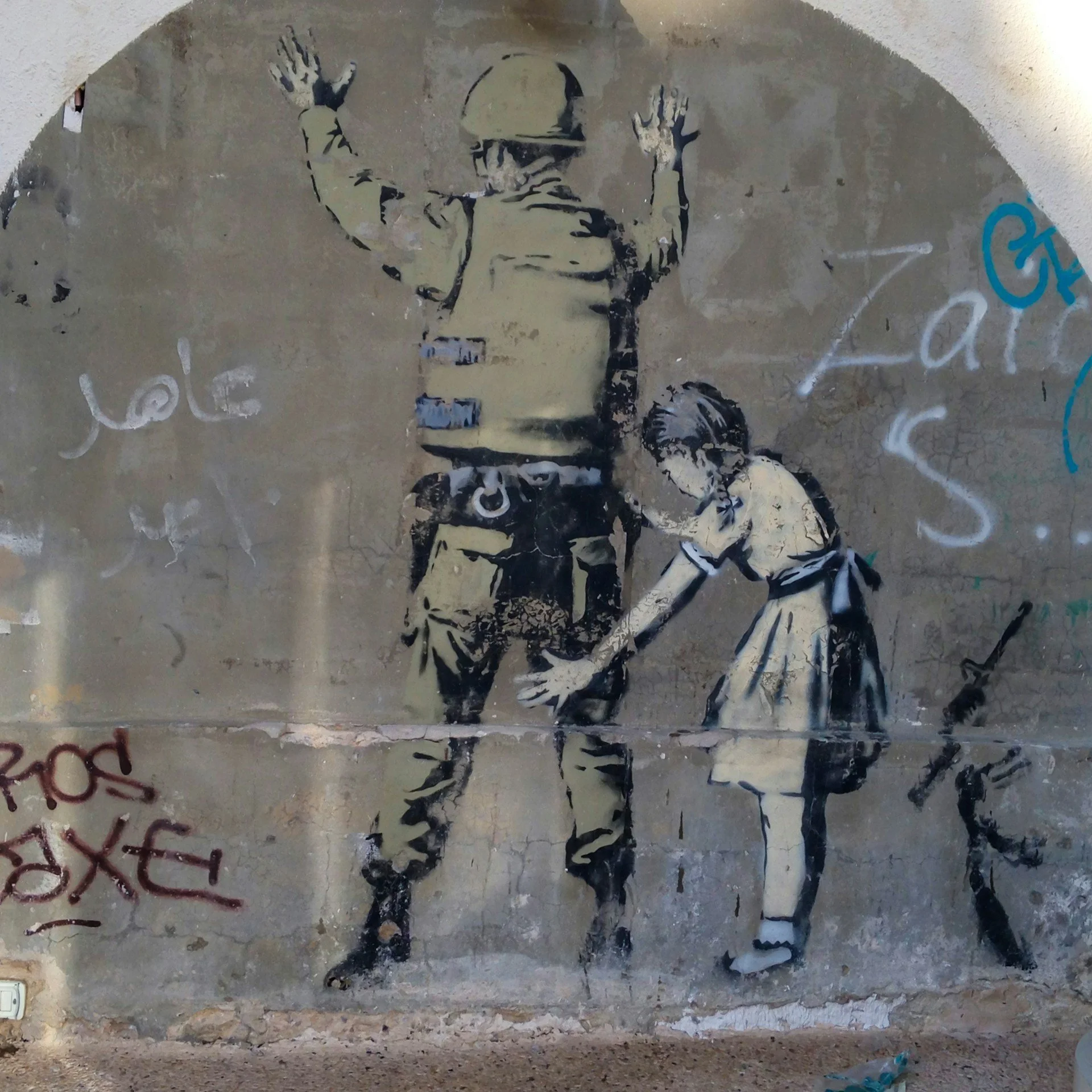
At 18, Soul Tsalik refused to serve in the Israeli military and went to prison for his refusal. Now 20, he joins Nonviolence Radio to share how he came to see conscientious objection as a duty, and how he works with Mesarvot, a network supporting young Israelis who refuse military service. We talk about growing up in a militarized society, his commitment to Palestinian freedom for the “sake of all humanity,” and what it means to take responsibility for refusing to participate in violence. We also explore what his story can teach us about nonviolence and the significance of doing what we know is right, even when we can’t see where it will lead.
Transcript (with gratitude to Elizabeth High)
Stephanie Van Hook: You are here at Nonviolence Radio. I'm your host, Stephanie Van Hook, and I'm here in the studio with my co-host and news anchor of the Nonviolence Report, Michael Nagler, and we're from the Metta Center for Nonviolence in Petaluma, California. We have a really interesting interview to share on today's show as we explore nonviolence in Israel-Palestine in particular.
A lot of the news coming out of Israel-Palestine, of course, is about the genocide in Gaza, and in the mainstream media, we're not seeing as much information about people who are working within the country to bring nonviolence and to build peace in ways that are sustainable, by working with communities and protecting people from violence and that kind of important work, as well as those who object to the violence itself.
In nonviolence, we know about so many different organizations and people. So at Metta, every day, we know that there are organizations like Combatants for Peace, we know that there's internationals working, like the project of Unarmed Civilian Protection in Palestine, UCP in Palestine, working in the West Bank. We know that there's people in the Israeli parliament that we've interviewed on Nonviolence Radio, like Ofer Cassif, who is working hard to present a different vision.
And then, of course, there are conscientious objectors to the draft in Israel, because for those who don't know, in Israel, youth are drafted into the military. It's required for them to serve in the military as part of their education from an early age, that this is something that's necessary, needed to keep them safe. And so the stories of people who say no to that, while it's very few people, their stories are then even more important to tell, and we have a new friend joining us on the show today. His name is Soul Behar Tsalik, and he's part of a network, a larger network called Mesarvot, and they provide legal, media, and social support for young Israeli activists who refuse to serve in the Israeli military. Soul just turned 20. He's a young guy with a really important message and so much courage. I think you're going to hear how his vision for what's right and is guiding his decisions to take risk upon himself, including serving time in Israeli military prison for refusing the draft. Michael, you've already heard the interview, what was your impression of Soul?
Michael Nagler: Well, first of all, both Soul and Mesarvot, it was thrilling to learn about them. To see such a young fellow, and he was so intelligent, so articulate, and knew exactly what he was doing. One thing that he says in this interview really stood out for me, and I want to kind of flag it. The question came up, I guess, about how did you make the decision not to submit to the draft, which they have to do automatically at age 18. And he said it wasn't a decision, it was a duty. It was just sort of something very deep inside him, and I just, I responded to that so much. And of course, the tragic part is the small number of people. You know, there are organizations that support them all around the country. You mentioned some, and then there's Rabbis for Human Rights and Shalom Achshav, which means Peace Now. I think they're still in existence, and they work on various dimensions of the conflict, although it's never been quite as bad as it is now. And then of course, as you say, they're international. The Freedom Flotilla is headed out there. I think they're on their way again.
It was inspiring that people can do the right thing, the really, really right thing, even with no particular perspective, no particular chance of, quote, "success." And it brought up the question for me, and I mentioned this to Soul, about our concept of "work" versus work. That even if you don't accomplish a particular thing that you're after, if you use the right energy and the right means, it makes the right impression on the social field.
But it's going to be an uplifting experience for all of us to listen to him and to think, two things, I guess. How did we get into this situation is probably the most important consideration. How can we prevent such things from happening ever again? Soul, of course, will talk about the artificiality and injustice of the very way that the state of Israel was formed. But then the other question is, the more urgent question is, what do we do about it now?
Stephanie: Okay. Well, let's turn to Soul.
Soul Behar Tsalik: I'm a student in Jerusalem and I'm an activist, and that's probably what I devote most of my time to. When I was 18, I refused to join the military, the mandatory enlist, and I went to prison for a bit for that. And since then I've been dedicating a large amount of my time to organizing and activism and everything we can do to help the human rights cause, but in this case it's the Palestinian cause here.
Stephanie: Were you called to enlist in the military after October 7th?
Soul: Yeah. Yeah, I was. I got my first draft notice before, and I already knew at that point that I'm going to refuse. But honestly October 7th and everything that happened afterwards, but also the day itself, emboldened me in that decision. There's even a term for it, like waking up or like it's a bit counterintuitive in English because it would be like to be woke in Israel. Which is people who after October 7th became much more right-wing. So that's a bit of a trend. And I think for me and for a lot of people who were already in that leftist direction, it actually just kind of proved a lot of very sad things we knew were coming. Which is that you can't occupy, rule, ethnically cleanse and terrorize an entire people without having dangerous repercussions, especially when my government has been frequently caught supporting who they claim to be their enemies for political reasons.
Michael: You have all my respect and my heart goes out to you, so you are really, you're on the right side of history.
Soul: Thank you.
Stephanie: I think we want people to understand a little bit about Israeli culture and the draft. So there is a draft there. Can you fill us in on what that looks like? And how many people tend to be conscientious objectors to the draft, and what kind of pressures are on people to join the military?
Soul: Yeah. I'll start by saying it's a brilliant system. The system is designed very well to make it very hard to resist, and it happens in many ways I feel people aren't really aware of. It's very common to have uniformed soldiers in classrooms from, like first grade. The society is so deeply militarized that the problem of not having enough teachers, one of the solutions to it instead of, I don't know, funding them more or making education cheaper or whatever, is that you get soldiers to become what's known as soldier teachers. And obviously having this uniform in the classroom from a very young age normalizes it.
I like to liken it to college in the US. Like, from a very young age, you're not really aware of it. People went to certain colleges, and as you get older, you know where your parents went, and where is it impressive to go, and where, what connections you have to get into certain places. And it's the same is true about military units in Israel. You know where your parents served in the military, and where is, like, the coolest to serve, and where these kinds of people serve. And when you're in high school, the reason you're trying to get very good grades isn't to get into university, it's to get into a good military unit.
So I feel it's very similar also, that kind of like familial pride, like our whole family goes to this unit and that kind of stuff. Which again, takes the focus off of the output of what military is and into what it does for you. It's a very normalized and civilianized thing. When you're 16, you get your first draft notice. Around that time, people of the army come to your school to help you try and understand where you'd like to serve and what's relevant to you, and help you get into a good unit. You get your first military draft order. You go to a military base. Sometimes you go with your entire class, and it's like a fun day.
You go to a military base, you get medically, socially, intellectually tested and sorted, and, and then you come back to school the day after, and all your friends and you argue about who's going to get into where and theorize and that kind of stuff. And enlistment is mandatory, obviously also for men and also for women. Yeah, and it's also a career path, like college. You want to get into a good unit because it will secure you a good job. And it's so deeply ingrained that you can't ... It's very hard to tell people who, first of all, never heard of not enlisting, because what do you mean? It's like saying I'm defying gravity. But also it's a really high level of ostracization because if you're betraying this, you're betraying your mother, your father, your brother, your son. And generally this kind of system that's built that you can't take responsibility and you can't take guilt because that immediately applies guilt and responsibility to everyone, to the whole society, right? It can't be that our soldiers are doing something not okay because it means that I'm doing something not okay and that my mom did something not okay, and that my son is doing something not okay, and I can't have that. So for those reasons, it's quite rare.
I can say I'm pretty sure I still have the numbers right, that since the beginning of the war and the genocide and everything, there have been around 30 public refusers, which means people who publicly refused to enlist in the army and went to prison. I think there have been another 30 who didn't go public, but told the army to their face that they're not interested in serving and went to prison. And this is an impossible number to count by definition, but I think there are a few thousand more people who manage to get out of the army from political reasons by not telling the army it's political reasons and managing to get some sort of other exemption. But this is a number that it's really hard to count, and we kind of want to have it stay hard to count because these are paths that we want people to have and the army to be less aware of.
Michael: How many people are in your organization Mesarvot?
Soul: Mesarvot? I think our community is less than 200, more than 100.
Michael: When you say community, do you tend to get together? Do you do mutual education, things like that?
Soul: Yeah, I'll say a bit about the organization. First of all, the name. Hebrew is a gendered language, which means every word pretty much has a gender, and the neutral gender for things that aren't necessarily referring to a gender is masculine plural. So our organization's name is Mesarvot, which means to refuse or we refuse, but it's in the female plural. This is for two reasons. One, we're a feminist organization, and it's important for us to put that on our flag. And for many years also, more prominently there were female refusers. But also because it gets the right wing very mad that we are butchering the language and everything, and they're like, "How can you be part of Mesarvot? You're not a woman." Which is funny. So the organization, it's actually, the term is a network. It's a network that helps support refusers through the process. We do this by giving them legal support, emotional support, experience. We connect past refusers to younger refusers who didn't go through it yet, who can tell them what you need to put in your bag and how to deal with guards and that kind of stuff. And more than that, it's a community. We meet, we organize demonstrations, we study together and learn history and philosophy and all kinds of stuff. The reason it's called a network is because we believe that the point is to remain open about who's allowed to be part of this.
Basically, the filter is that you need to be a refusenik who's anti-militarism and anti-sexism. These are basically our two barriers. And from there, we have a pretty wide ideological spectrum. You have pacifists and communists and anarchists and hippies, and I don't know, any flavor you like. And yeah, that, that's about it. Yeah.
Stephanie: So it takes refusing military from putting shame on a person or a family into a badge of pride, into a network of support, into a vision for a better future, a new future. This is how we live, this is how we support each other.
Soul: Absolutely. There are many people who this decision is a huge break between them and all their friends and their family, and they cut contact and that kind of stuff. And having this network to support each other and to do this important work together and not stopping and just refusing, you know, organizing demonstrations and aid and everything, it's really a launching pad for this kind of social work.
Stephanie: Now most schools, as you said, there's military teachers there and...But your school was a bit less militaristic, so maybe insert us into your trajectory of realizing this is bonkers, you're not going to participate in it. And did your family support you?
Soul: I think there are a few reasons I got to where I am, and that these are things we can learn from. I think one thing is I went to a liberal school in a liberal city. I grew up in Tel Aviv. And chronologically, the judicial reform was starting to happen, and it was very popular in our circles, in our school circles, to go to the big demonstrations against it. So I started going to the big demonstrations against it, without being too politically aware. And I felt that there was something a bit off with the fact we were dealing with these far-right people trying to take over our government and our country, and what we're doing against these nationalists is waving Israeli flags, right? It's kind of funny that it's the same flag on both sides, and they're both claiming who's more Zionist and who cares and that kind of stuff. And I felt there was something a bit off about that. And then I started to become a bit more politically aware, and other things started to bother me. Like how there are many chants of, "This is the only democracy in the Middle East." And when you look at it closer, like, is it? Is this a democracy? You know, there are millions of people who have no right to vote here, and are under the control of the government. That doesn't really sound like a democracy to me, right? And these people in this supposedly more to the left demonstration are chanting against the other people that they won't let them ruin the democracy, and it felt either malicious or ignorant.
And at the perfect time, I found this, it's called the radical bloc or the anti-occupation bloc, who would come to these demonstrations and talk about the issue from its root cause, which is the occupation, and Zionism, and apartheid, and how these things are very related. And luckily I found them, and from there I heard about refusal, and I realized that I'm not willing to take part in the system, and I'm privileged enough to be from a family who won't cut contact with me, and would even, my close family would even support me, that I'm physically healthy enough and everything that I can go through with this. And I think another thing that's important is that my mother's American, and I grew up with English as a language, which meant when I was starting to learn history in high school and things were piquing my interest, when I went to Google them, I went to Google them in English. And slowly but surely you see this kind of split between what you're being taught in the classroom, and between what this more objective source or sources are telling you, and that becomes even more intriguing so you go even deeper and you realize that a lot of the stuff here is heavily revisioned and narrativized.
And I think that's also a huge privilege that I have that many people... I think another thing people abroad don't get is how isolated the average Israeli is. The average Israeli has no idea what's going on in the West Bank or what's going on in Gaza. The average Israeli doesn't know what, I don't think has heard what the term Nakba is and has never met a Palestinian if they're not their bus driver or a pharmacist or a doctor. So it's much more closed, I think, than people understand.
Michael: Do you have connections, aside from the obvious connections with America, for better or for worse, do you have connections with other pacifist or resistance groups in other parts of the world?
Soul: Not to mention by name, but yes. Groups in France and I think even a group in Brazil now, and groups in the US, and in Germany. I think people understand that it's important to support what we're doing and that it's a unified struggle. It's not a coincidence that these people who are advancing these ideas of nationalism and racism and Jewish supremacy and this kind of stuff also support the same people who are pro certain racial, extreme capitalist hierarchies in other parts of the world.There's this thing of, like, you read Herzl and he talks about how he will make the antisemites the biggest friends to Israel. They will be the biggest support. And it's funny how there are these crazy antisemitic evangelicals in the US who are huge Israeli supporters. And that it goes vice versa, and these Israeli politicians love them, and they don't care because it's the same thing, it's this dehumanizing pyramid ideology in different flavors.
Michael: Wow. Is Gandhi known, heard of, studied, thought about?
Soul: I think, at least I'll say from my experience. Again, I went to a liberal school and grew up in a relatively liberal city, and one of the great tricks they pulled off is that a lot of radical politicians who did very significant hardcore impressive fights for human rights are so deeply canonized around the world as these liberal human rights icons; Israeli liberals have managed to take only the parts they like.
So in my school, of course we were taught about Gandhi and the amazing things he's done, but in the same way that I'm sure in the US you're taught about Martin Luther King but not that he was a socialist and a radical and these kinds of stuff, right? You have politicians of the extreme right who would probably have marched against him celebrating Martin Luther King Day. It's this kind of, I know the term to be whitewashing, right? So there's this extreme whitewashing. So yeah, we grew up on Gandhi. I grew up on Gandhi for sure, but I don't think anybody would dare to tell me the connection, to cross the points between Gandhi's anti-colonial fights and what's going on in Israel-Palestine.
Stephanie: Ofer Cassif, we interviewed him a few weeks after October 7th, and he was definitely saying that Gandhi had influenced him as a young person. Is he still in the parliament?
Soul: Right now he is. And we're going into another election, and I think he's going to be again.
Stephanie: Okay, so keep bringing us along into the point of your conscientious objection. And so you're in school. How old are you when October 7th takes place? And at that point, had you already submitted saying, "I'm going to refuse"? Let's continue this story a bit.
Soul: Yeah. So I finished school early, and I went to my first draft notice meeting at the military base a bit less than a month after I finished school. And I went there and I knew already I was refusing. I realized that this is what I'm going to do. It was actually funny. I go there and I go through all the tests, and there's no reason to make a fuss now because the difference is if they'll come to your house and take you to prison or if you get to decide to come to them to go to prison, which is a bit nicer of an experience than them breaking down your door.
So, you know, I'm going along, I'm doing these tests. Honestly, I'm having an okay time. And then you get to this psychological evaluation, and they sit you in a small room with a psychological evaluator. And we're making small talk, and I'm a pleasant guy, and he got the job for being a pleasant guy, so we're having a pleasant time. And at some point he tells me, "Okay, have you given thought to where you want to go to in the army?" And I tell him, "Actually, I've thought about it a lot, and I'm not going to the army." And he does a double-take, "What do you mean?" "I'm not going to go to the army. I'm going to get out. I'm going to conscientiously object. I'm going to go to prison or whatever. You can also decide to release me if you prefer." And then he leaves the room for five minutes, and he comes back kind of still shocked and he's like, "Okay, and if you had to go to the army?" I'm like, "No, I'm not going to the army." "And if you were forced to go to the army, what kind of job would you prefer?" "I'm not going to the army." A few minutes like this, and at a certain point he's like, "Okay, good luck." That was in June or early July 2023. Honestly, by that point, I wasn't much of an activist. I was reading a lot, I was learning a lot, and I was helping-- starting to get into it and help other refusers because I was already part of the network, but I wasn't too much into it.
And then I got my draft date, which was going to be November, and starting to get prepared, and then October 7th happened. October 6th, I was having an argument with a coworker and, and I was telling her, like, "There's no way this is working.There's no way that how we're occupying Gaza (which we're occupying, we can't say that we're out of Gaza, that's a half-truth or a full lie), and we're occupying the West Bank, and we're being very hostile to all our neighbors, there's no way this is going to end well. We're outnumbered, we're outmatched, and we're outmaneuvered morally, and the world is going to notice that at a certain point, and we're very dependent on the rest of the world." And she tells me, "I think it's going to work. I think it's stable." She probably said something nicer but, "we can live with the, with our boot on somebody's neck, and that will be our peace." And I told her that I bet that in 10 years and 20 wars that will happen in that time, she'll understand that this isn't the way to live for anybody. And then, of course, 12 hours later we're both in our bunkers not really knowing what's going on yet, and, and she texted me, "Maybe."
So I already knew. I knew it was coming. I feel like it's like this prophecy that for us was very obvious. Of course something like this is going to happen. Of course meaning not it's okay that it happened. It's horrible that it's happened, and that's why we need to oppose this even from beforehand, right? That's why we need to end the occupation, and free the Palestinians, and everything because not only obviously because of the horrifying things we've done to them, but also because of the horrifying things it's going to do to us, especially when you have leaders like Netanyahu who are supporting Hamas directly in order to break apart the Palestinians.
So it just confirmed a lot of the things we were saying. So I knew I was going to continue with it. We knew probably it meant harsher treatment from the army for our refusal, but we were willing to take it. I went to prison. I went for around a couple of months.
Stephanie: Did they knock down your door or did you go directly?
Soul: No, I went to them. We did a demonstration in front of the military base. I had the same refusal enlistment date as a friend of mine named [Ido], so we refused together publicly. And it was the same time that another refusenik, who's a good friend named [Itamar Greenberg], was refusing. So we all, like, at certain points of the prison intake, we were seeing each other. Military prison in Israel for soldiers, it's for soldiers. It's like you're going to prison with other soldiers who committed some crime. So it's kind of tough socially because you're there for opposing their existence, and they're there for making some mistake or committing some crime inside prison. But it's really not to be nearly compared to what Palestinians go through in the prison system, which is systematized abuse and torture and such horrible things that you can barely even talk about them. So it's hard to-- I feel bad that I'm complaining.
I was released after a bit, and then I really got into activism since then, mainly in the West Bank. I spent a lot of time in an area of the West Bank called Masafer Yatta, or the South Hebron Mountains, dealing with settlers, army, and soldiers who are basically the same thing to an extent that many times they are the same people just changing an outfit, and trying to help these communities survive day-to-day terror.
Stephanie: Yeah. I do want to emphasize you knew that you would be making sacrifices, you knew that you would be going to jail, you were threatened that your future would be ruined, that you wouldn't be able to get a proper job and take care of yourself, and that you'd be ostracized, and yet you still decided to risk yourself and your future and your relationships, if not with your family, with your friends perhaps, in support of the Palestinians.
Michael: In support of the Israelis also
Soul: Or of humanity.
Michael: Of humanity, of humanity.
Soul: Yeah. I feel like it puts me in kind of this complicated place because it's... I don't want to make it sound like a decision. It's a duty. It's what we have to do. And maybe not all of us have the resources to refuse publicly, and that's okay, you can find your way. But it's not something you can… I don't want it to sound impressive. It's not impressive. It's not something you can put on somebody else and say, "Oh, if only I was X or Y, then I'd do Z." But no, we all have to do Z. And we find our ways, but it's really, it's the minimum.
Michael: Wow.
Stephanie: In our conversations with Palestinian friends who have been imprisoned, prisons become schools, and people learn about resistance, and they become even more activated in terms of the decolonization struggle. And I wonder, what was your prison experience like, living with people who had similar viewpoints, different truth points than you, and guards? What was that experience like within the prison?
Soul: It's very interesting stuff, but it's, like, it's a very different situation what I was in, right? Because what this idea of prisons kind of becoming a training grounds and schools and, I don't know, suddenly clubs and intellectuals come out of prison and that kind of stuff. It's for a group that is in prison together, and it minimizes the difference between them, and it gives them a lot of time, intense traumatic time to spend together. But for me, for refuseniks in prison, you're intruding on that because you're going there and you're with a bunch of soldiers who enlisted and who are in for making a mistake or committing a crime on purpose or by accident, and you're not in the same boat as them. So it can be dangerous.
I wanted to be very upfront with everybody why I'm in, because I felt that lying was more dangerous and that I felt I could take the consequences and that's what I'm here to do, and I'm open to talk about this. And that's honestly a lot of what I did. I'd say besides the time we get counted and the three times a day we clean the prison, and basically 90% of what you do in prison is stand and get yelled at. It's not supposed to be a fun experience. But other than that time, I've spent talking with people and reading, basically. I think at the end, you live and you sleep and you wake up and you eat, and you get yelled at and abused with the same people, and they respect you because you have to be humanized. You suddenly become humanized, right? We're all going through the same thing. So luckily, I was humanized pretty fast, and because I can hold my own in the discussion, I became a bit respected there. And I can even say that I managed to change a few people's minds, I think, and open up a lot of people's minds.
Michael: Wow.
Soul: But it's not the point and it's not effective. It's very small scale, very small scale. And these people, they finish their stint in the prison, and they go back to their army service. And it's people who don't have these privileges that I had to grow up in a liberal school and to have another language and to have close family that want contact with them. They feel like they don't have a way out. You can talk to them and intellectualize it as much as you want, but in the end of the day, the system is too big for them to get out. And that's, I think, part of the importance of; people who grew up in liberal cultures; we have this fantasy of defeating our idealistic opponents in debate and in discussion. And it's not going to work like that because there are some disagreements that are idealistic.
I value all human life equally, and that's not a factual statement that all... You can't say, "Here's where it's written that all human lives are equal." Doesn't say that anywhere. It's a belief of mine, and I think it's an important belief, and I'll fight tooth and nail for that belief. There are some people who don't believe that, and it doesn't matter what the facts are, doesn't matter what the facts are, they're not going to believe that. And while I continue to kid myself that I just need to find the exact fact to convince them, they're already making progress with their ideologies. So I think it's important to let go of that fantasy. And of course, debate is important. I think more than debate, education is important, and part of education is open discussion.
But Israeli society is so far gone and so isolated and in such a deep machine of guilt and responsibility and being implicated that you can't debate people out of this. It's not a factual disagreement, even though they're in a whole different world of facts. And I think that I'm saying all this to stress the importance of international pressure, because that's something that can't be debated. When prices go up, people are going to start questioning what's bringing them there. And when people are less friendly to the Israeli flag, and aren't quiet about what Israel has been doing since its founding, and start cutting diplomatic ties, I think it has a real effect, and it forces people to rethink and reconsider and renegotiate with themselves what their ideals and what reality is. And as long as you cede ground to the legitimacy and to this being a factual disagreement or a matter of perspective, then you're going to be in this struggle forever.
Many very terrible regimes that don't exist today weren't changed from the inside. The Germans didn't reform themselves. I give this example to Israelis a lot because we think, they think, "Oh, Palestinians can't, they can't change, and they want violence," which is not factual, based on no statistics, and based on a complete bogus reading of history and offering peace and that kind of stuff. But also, what are you talking about? You know who's one of the biggest diplomatic partners to Israel? Germany. The Holocaust wasn't even 100 years ago. But the Germans didn't change themselves. And of course, they didn't fully change, and they have a way to go. And I was just in Germany speaking at a demonstration against militarism and fascism and nationalism that's going on there, but it's a long way better, and they didn't change themselves.
Stephanie: I have a couple of questions for you. I don't know how you'll respond, but they're provocative, okay? But they're sort of meant to provoke. So you said that your mother's American. Why are you staying in Israel? If you believe that this is a land under occupation, first of all, why stay? Why are you staying in Israel if you can leave?
Soul: It's a good question. I don't know. First of all, I'll say I'm 20. I'm actually recently 20. I'm still figuring that kind of stuff out. There's a good chance that I won't be here soon. I have this experience, I work in human rights and I work for the humanist struggle, and in this case, the Palestinian struggle, and I'm quite fanatic and radical about it and it takes most of my time. And on the way from meeting to meeting or from a ride to the West Bank or something, I take a bus, and I think I take around a bus a day. And I know that around, I think it's almost 30%, or maybe it's more, I'm not sure. Around 30% of the national budget goes to the army or the Ministry of Defense. For the sake of the argument, discussion is when I pay for a bus on my way to do my activism, around two shekels from that go to funding the thing I'm fighting against. And so I think to myself every day, "Did I do enough today to offset how much I'm funding the thing I'm fighting against?"
Michael: Wow.
Soul: And that's a really not fun way to live, to be in this constant calculation. I'm not in a particularly good position to change the situation. I am completely ostracized from Israeli society. They're not interested in hearing from people like me. I'm not part of Palestinian society, and I don't claim to be. And I can't influence these societies deeply. So I'm in this very tiny spot between a rock and a hard place, and all I can do is help from the side. And I think to myself, "If this is all I can do, and I'm still funding this..." And this is a very a selfless explanation, but there's also much more legitimate and selfish reasons of it's not really fun to live like that, to know that's what my taxes are going to, and when I pay tax on anything or a bus, or to just be in this society I'm so deeply against, it's not a really fun experience. And I think it's important questions to constantly ask, and I'm very, very suspicious if I'm doing enough. And I'm doing a lot, and I'm still very, I'm questioning it a lot. And I feel like maybe I could do more from a different place. For the struggle here.
I'm very emotionally tied to the US, and I see a good chance of me going there. And I think once the US cuts funding and cuts support for what's going on here, things are going to look very different, and I think I might have more of a place fighting this battle from there where I'm less directly funding it and where I'm more free to move around than what I can do from here. So I'm constantly rethinking it, and honestly, I can barely justify staying here. I don't think I can justify staying here. I think it's an emotional thing. I think some people can. There are some activists I know who do such significant work that I think it's very important that they're here. But it's like this, it's a horizon you can never get to. So I don't know. I think about it a lot.
Stephanie: And those people, too, they're building up to that. You know, you are 20, and what you're doing is so significant already. It is significant, and I think that's part of the challenge of being part of struggles, is understanding that none of us can do it all. And not losing faith that our part, however small, still makes a difference. It matters. It does matter.
Michael: That's exactly what I was going to say. So having struggled with that same question for a lot longer than you have, I just have the faith that if we hold on to our truth, that it will make a bigger difference than we realize, and that the scale is not the only thing that matters. That in other words, if a few people who are displaying the truth end up having more power than large numbers of people who are misled and in the dark. So that gives me faith to continue even though, like you were saying, we don't see the results. Good work will have good results, I'm absolutely convinced of that. That's what I've learned in decades of slogging along here.
Soul: I hope you're right.
Michael: I hope so too.
Stephanie: I think that was an important question, and I hope that it wasn't too upsetting for this-
Soul: It's a good question
Stephanie: ... send you into a depression for the rest of the day. I don't want to do that because I really do value, I personally value that you are...
There's so many of us in the US who want to go over and be of support in some way of third party or protective presence and so forth, and the fact that you're there and able to either welcome people who want to come over or support people, you're in a really good position, so I do…
Soul: I just have one note on that. Come do protective presence, come see what's going on in Palestine. It's important. I don't know exactly who your audience is and if they need to hear this, but don't do Aliyah. That's one of the ways they get you, is that they make you believe you're fighting the system from inside it, but you're just supporting it. I think it's important to come as internationals, but becoming an Israeli citizen to try and fight this is counterproductive to the point. Sorry, yeah.
Michael: Interesting. Any words about the extremism that's what the political climate in Israel-Palestine is at the moment, in Israel in particular? I have the words from our previous meeting here on paper notes, "genocidal fascism." So tell us about the political climate. Are things becoming more extreme day by day, hour by hour, or do you see any signs of hope?
Soul: Short answer is no. Not from politicians in Israel. Again, generally I don't see my signs of hope from Israel at all. I think my hope is from the Palestinians, and my hope is from good people around the world doing their best, and hopefully that will save the Palestinians and the Israelis. Yeah, of course. It's the same struggle. But mainstream Israeli politics are so far right that it doesn't translate to English. We talk about the left-wing opposition party called the Democrats, who to this date have supported, at least at the start, every war, including October 7th, and every war since, including Iran and everything. That's the left party. Like, the far radical left. Like, in mainstream Israeli politics, the leader of that party is somewhere as radical as Ben-Gvir is. And I think by international standards that this Yair Golan would be considered firm right-wing. So, it confuses people a bit. There is one leftist party called the Hadash in Hebrew, Jabha. It's a socialist Palestinian party. They're very sweet. I like them, but there is a very narrow field of opportunity of what they can do because they're so targeted and because they'll never be let into the government. Right now, the only party that agrees to sit in a government with Palestinian parties is the Democrats. Everybody else, it's a non-negotiable of not sitting with the Arab parties. Nobody is talking about a Palestinian state. In fact, they're competing about who's more against the Palestinian state. Nobody's talking about ending the wars by any means other than warring even more. Yeah.
MIchael: I just want to run this idea past you. So it seems to me, I was born and raised during the war, during World War II, and it seems to me that all the negatives that you're describing are a result of the Holocaust, of deep traumatization that has never been addressed. And I wonder, you're from a very different generation and so forth, I wonder how that idea lands with you.
Soul: Honestly, I disagree. I think there's this clever political maneuvering of trying to claim that Israel was formed as a response to the Holocaust, which is historically very inaccurate. The Balfour Declaration was before the Holocaust,
Michael: Way before
Soul: … way before, and most of the Aliyah was before the Holocaust. And even more, there's this term in Hebrew called the הכיבוש משחית [Hakibush Mushchit] the occupation that corrupts, and I think it's, like, so succinct that once you start doing this dehumanization stuff, it spreads. It's an illness, and it poisons your roots. And Holocaust survivors in Israel were treated horribly.
Michael: Yeah.
Soul: Were treated disgustingly. Mainstream Israeli politicians were ashamed of them, and they shamed them. And even today, there is some of that still going on.
Michael: Wow.
Soul: And while that goes on, there is also the other side of the political maneuvering of convincing everybody that actually this is because of the Holocaust and because of antisemitism and because Jews need a safe homeland and that kind of stuff, even though obviously the most dangerous place for Jews in the world by far is Israel. So I don't think it's that. I think when you build a country on occupation and ethnic cleansing from its very roots, and when you have very smart people who know how to build this social machinery of agreement, then these are the fruits that it comes to bear. You read Ben-Gurion, and you read Ben-Gvir, and if you read it honestly, they're not that different. Ben-Gvir has the religious element, but they're both talking about colonialism and banishing the Arabs and that kind of stuff. We retroactively narrativized it. It's revisionist history, but I think we need to cut through that.
Stephanie: That was Soul Behar Tsalik. He just turned 20 years old and is a conscientious objector to the Israeli military, and he was sharing his perspectives and experiences as a nonviolent conscientious objector with us. And there's really a lot to think about in that. He's part of a network called Mesarvot, and they provide legal, media, social support for Israeli activists who do want to resist serving in the Israeli military. So it's really an important network, and it's also important to have their stories heard, because part of the machinery of these systems is to keep resistance stories suppressed, censored, untold. Now, yeah, there's a lot to think about in there. I think maybe we should start with the sort of painful question of how, as nonviolent activists, we can carry the weight of the struggles that we're part of, and not lose faith that we are able to do something, that we're able to have an effect. It’s because we experience the pain of feeling ineffective and not being able to stop everything, and yet we still have to do it.
Michael: Yeah. Let me say actually three things. First of all, to do the work of conscience, the work of truth, benefits us in a very deep, I'm going to say even in a spiritual, psychological way. It makes us stronger and healthier. So that's one thing. Another thing to say is that we sometimes forget that we're part of historical movements when we do things like this. By coincidence, I happened to stumble on a edition online of Teen Vogue. I don't usually read Teen Vogue. But my heart just skipped a beat. There's a dramatic picture of Tal Mitnick, who's a very well-known refuser, and a woman refuser with him, a young woman named Sofi Orr, standing in a big circle, and they're burning their draft notices. Huh. And we just watched the Gandhi film, and that incredible scene where they burn their passes, and the parallelism just struck me so forcibly, and it did say that, you know, what we do resonates with historical forces. I have been using a phrase for myself recently that we're catching a wave that we may not be aware of. And the third thing I think we need to be aware of is the teaching of the Bhagavad Gita that [na phaleshu kadacana]. Thank you. So, that says that you have the right and the duty to do your work, you have no right whatever to the fruits. and that's something that's hard for us to wrap our mind around. Naturally, you have to watch the results of what you've done. You have to take in the feedback. But ours is to do the work. The results are in the hands of God.
Stephanie: So another way of saying that is that the society wants to corrupt our conscience in some way. And capitalism wants to..., whatever the force is or whatever you want to call it, corrupt our awareness of our interconnectedness and unity. And so our job is to learn how to be incorruptible, how to keep ourselves from participating in a corrupt system and structure as much as possible. And as we do that, we will help to bring change, but we're still living within that force of corruption.
Michael: Someone like Soul. But, I do think it's important to emphasize these invisible forces that are at work in the world, and that we are trying to participate and cooperate with positive forces. And here's where, you know, Gandhi's insight comes in so powerfully, that in the long run, they have to prevail. That, you know, as he says in the film, "We can't lose. We cannot." Because, as I say, because we are connected with a very deep, underlying, powerful force of nature. And the hostility that you were describing is against nature and doesn't have that backing.
Stephanie: And we never know when we're preparing ourselves to have a bigger effect. Like, we have to make ourselves ready, in a way. And then at some point, something that we do also can be used in a bigger way. Like, if you're taking the example of Gandhi, he was just trying to make a living in South Africa, and then he got thrown off the train.And it all crystallized for him. Something changed. And we don't know when that Pietermaritzburg moment is going to happen to any of us. But we prepare. And I think that's also important to know, is that maybe the actions that I'm taking now are just a preparation for how I can be used for a bigger struggle for justice in the future. We just don't know fully. And if we think we know, it's a little bit of our ego speaking. Like, "I'm going to be the one to turn this ship around." Even that seems counterproductive.
Michael: Yeah. I don't know... I could not, for example, identify when or what influences made me a conscientious objector.
Stephanie: Right. You were that, too.
Michael: I was that, too. The only reason I couldn't actually get classified as such is that my daughter was born at just the wrong moment for that. But it's a little bit like Soul. It wasn't an event that I can identify. Just not that kind of person.
Stephanie: Well, so each one of us doing reflection on our lives in this way, and I think it's important. We also recommend, at the Metta Center, five things that everyone can do, and it feels important to keep talking about them. The first one is to unplug from the mass media, because, think, if you just heard the story from Soul about being a conscientious objector, have you seen that in the mass media? Maybe a little bit, but the story isn't told well. Secondly, to learn everything you can about nonviolence. Here you are at Nonviolence Radio. You're doing it. Stay with us. The third is to get a spiritual practice if you don't have one already, because we don't know the results of our action, because we know that we're carrying the weight that's heavier than we can bear as individuals without a connection to our inner deepest self. The fourth is to get more personal with people. As you heard Soul in prison, he's changing hearts and minds in prison, maybe even just a little bit by having conversations, and being humanized with one another. And then the fifth is to do everything you can to get involved and help tell the New Story. I think we see Soul really covers all of these bases for us as a very important and courageous example of nonviolence.
Michael: That's a great observation, Stephanie. I think we should write and tell him that.
Stephanie: Well, and then any last thoughts, Michael?
Michael: Let's take courage from the fact that there are such a small number should never demoralize us because, as I say, we are resonating with larger forces in the world. And then if we learn that second lesson, not to be always looking for results, the way we're trained to do by the mass media in our culture, if we have those two things going for us, I think we can be upbeat and confident that our life makes a difference, and there's nothing more important than that.
Stephanie: Thank you. Well, this has been another episode of Nonviolence Radio. We want to thank our mother station, KWMR, for making the show possible, and then to the Pacifica Network, Elizabeth High, who helps to transcribe and edit the show post-production, thank you very much, to our friends at Waging Nonviolence, who also syndicate the show, thank you.
And, today's guest, Soul Behar Tsalik, and the Mesarvot network, we're very grateful to have their perspectives and experiences here on the show. It's important to tell their story. Hope we have more connection, and hope to bring you more from them. And to you, all of our listeners, If you want to learn more about nonviolence, you can go to mettacenter.org. That's Metta with two T's. If you want to find archives of the show, nonviolenceradio.org. And take these shows and listen to them with your friends and discuss them. It's an important way to get involved. So until the next time, everybody, please take care of one another. We'll be back in two weeks.