
Disagreement as Practice: Communication Across Divides (with Francesca Po)
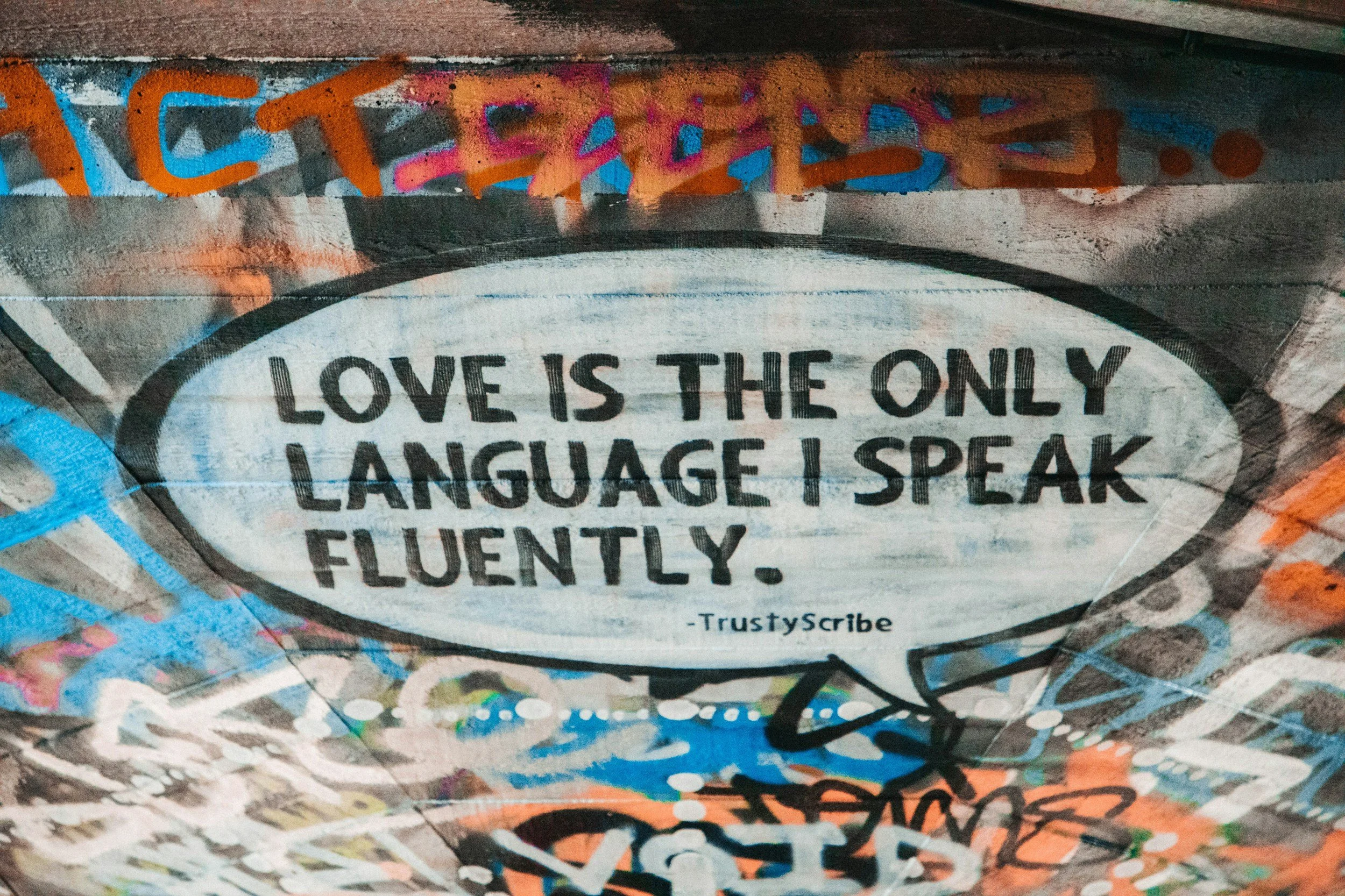
In this episode of Nonviolence Radio, Stephanie Van Hook speaks with nonviolence educator and Metta Center board member Francesca Po about communication as a living practice of nonviolence. Moving beyond any single method or formula, they explore how curiosity, dignity, and self-awareness shape the way we engage across disagreement.
Together, they reflect on what it means to stay in relationship without giving up truth, why curiosity can soften conflict before it escalates, and how communication becomes a form of rehumanization in a deeply polarized world. The conversation also touches on the limits of “cancellation” as protest, the importance of restorative approaches, and the role of self-care in sustaining meaningful dialogue.
With gratitude to Elizabeth High for the transcript support.
Transcript:
Stephanie Van Hook Well, greetings and good morning, everybody. You are here at KWMR. This is Nonviolence Radio. I'm your host, Stephanie Van Hook, and I'm here with my co-host and news anchor of the Nonviolence Report, Michael Nagler. Good morning, Michael.
Michael Nagler: Good morning, Stephanie.
Stephanie: And we're from the Metta Center for Nonviolence in Petaluma, California. And okay, so this show today, Michael, I want to sort of have a broader discussion about the way that nonviolence and communication overlap. I was thinking, first of all, when people hear about communication, they immediately go to Nonviolent Communication, which is a method, a set of tools created by Marshall Rosenberg, and then others have adapted and built upon it. And it's tools where you learn how to make "I" statements and kind of center yourself in needs and strategies for meeting those needs and so forth. It's a beautiful field of study, and going directly to the stories of Marshall Rosenberg is really, really enlightening. This show is not about Nonviolent Communication, though. I want to go into a broader discussion about communication.
And the first thing is that, I think that in nonviolence, we could probably talk about it three ways. There's communication where we nonviolent, you know, where we communicate with each other using nonviolence. There's communication for nonviolence and there's communication about nonviolence. And I think that we try to do all of those things on the show. You know, the Nonviolence Report is a really good example of communication about nonviolence, right? We're using our tools that we have in order to tell people the story of nonviolence happening around us. I think that with, though, communicating nonviolently, what is at the basis of it is a sense of, there's an inner vision of the world that we want to live in. So we start with that vision of: we want a world of greater democracy and we want to actively participate in that, we want systems of restoration, not cancellation, we want systems of care, not retribution, so forth. We start with that assumption, and then the way that we communicate or what we communicate is aligned with those things. Michael?
Michael: I just thought maybe not everyone is familiar with the expression " 'I' statements," and that's an important distinction. The difference between saying "this is the way it is," versus "I see it this way." When you make an "I" statement, you invite into the conversation the possibility that you might be wrong. And therefore, heavens forbid, that the other party might have a point of view.
Stephanie: Yeah. Right. Well, it's also not holding on to rigidity. And sometimes, you know, understanding where that need for rigidity comes from. But also at times we do need to be rigid about what we're…well, let me back down from that. Maybe there are instances or examples where we have to be firm in our convictions, but without being rigid toward the person or group that we're communicating with. And I think that's a finer distinction of how to live our values, but also to have some flexibility at the edges where that relationship can connect. We need flexibility around the edges in order to connect with others.
Michael: Yeah, you know, Stephanie, when you lay it out that way, it becomes clear that there are two basic principles behind nonviolent communicating. One is that you're never attempting to deprecate the other person. So you find a way to say, "I see it totally differently." And the other is that you're able to identify almost instinctively what are not negotiable, what are the basics that you cannot compromise on. Gandhi was very, very good at this. And once you've identified that and landed on it, then you have the flexibility to compromise on everything else. We were just talking in the car about a famous example with the passes when he was in South Africa that non-Europeans were required to take out passes. And it was very humiliating, they refused to do it, they burned the passes, they were beaten, they were imprisoned. Gandhi worked out a compromise with General Smuts where the Indians and others, or Asiatic people, would take out passes voluntarily. So for him, the thing that could not be compromised was human dignity. Everything else you could give away. And having that flexibility enabled him to negotiate his way through many apparently irresolvable conflicts.
Stephanie: Yeah, there's conflicts and there's disagreements. And I think we don't recognize how often throughout the day, you know, we do have, we do regularly disagree with things that we see or read. And sometimes it's just, you know, living our life differently: I don't agree with how this is happening in our world and I'm changing my life. And other times I'm having conversations with people and I realize that, "oh, wow, we really do disagree about something."
But I find that what nonviolence has also trained me to do is also to– I almost don't recognize when I'm in disagreement anymore because the side of curiosity comes out sooner than my awareness that I'm in disagreement. So curiosity ends up kind of melting away my reaction to "I'm in a disagreement, I need to fight, I need to escalate, I need to go." Rather, curiosity kind of melts that into a, "well, here, look, we're in conversation and I want to understand where you're coming from" kind of thing. So I don't know. I think that you and I probably had several disagreeing perspectives in the car, but we just kept talking. And sometimes through that talking, we end up finding, you know, what we're really trying to say or we're really going. So I think it's all really interesting, Michael.
Michael: It's interesting and helpful, just wonderfully helpful. It greases the wheels of human conversation. Somehow I don't like that metaphor.
Stephanie: Yeah. And I also like this holding loosely the – or rather holding firmly to the kind of vision of the world that we're trying to build or that we're working toward as opposed to holding firmly to formula of how I need to interact with people, because I feel like one way invites more diversity of communication and the other way extracts a kind of conformity in the way like "if you don't speak to me using "I" statements or if you don't speak to me about your needs, I can't hear you anymore." And I have some, you know, interactions with people that have been using formula to communicate, and I find it off-putting in terms of understanding what's happening in the relationship versus being able to express authenticity together. And to get to that place in a more natural way. That said, formula can be effective, especially if you're looking for a tool to use.
Michael: Along the way in your conversation, Stephanie, you dropped the word "needs." And that reminds me of Marshall's very helpful distinction between needs and strategies and the recognition that— two things: human needs are really few in number, once you get beyond the food, clothing, and shelter needs, we need dignity, we need a sense of community, and we need meaning. But most of the conflict that we get into when disputes elevate into conflict: it's about strategies, how to reach those needs, not about those needs. So two things about needs. They're few in number, as I just said, and they are never in conflict. It's important to recognize that; that I can satisfy every legitimate need of my being without infringing on the need of anybody else. That's so important.
Stephanie: That's so important. Gosh. Okay, one more important thing I want to get into… So I'm thinking of the Escalation Curve, which is a model that we've developed at the Metta Center. Michael, you really developed it. You developed it and then gave it to the Metta Center as a beautiful gift.
Michael: Thank you.
Stephanie: Yeah. And so the Escalation Curve shows that conflicts escalate and they start off in a place where it's easier to reach people through persuasive conversational methods, and then as the dehumanization rises the conflict escalates, and sometimes it's we communicate then with our bodies, with putting ourself out there doing constructive program work, building alternatives, showing that we're not cooperating, to the very final when conflicts are extremely extremely escalated and the dehumanization is so high, you know, there's even the communication of one's own person where things get a little bit harder. Nonviolence also gets a little bit more tricky at that point where we generally say avoid coercive measures. But sometimes like if somebody's in the middle of the road and going to be hit by a car, you have to pull them out, whether they want to be, whether they realize the car is coming or not, you can see it. You pull them out. Yeah. So I want to, with that escalation curve, which I'm trying to describe over radio, which is good to see if you go to our website or read Michael's book, Search for a Nonviolent Future, it's in there. I think that we, as a world society right now, as a world culture with the war and violence happening in all places, that we're pretty escalated in terms of what dehumanization is taking place. And so that our communication really needs to have a deep humanizing effect. Because the deep humanizing effect will help to de-escalate the dehumanization in our world. So my commitment to communication at this point is to rehumanize and to avoid dehumanization in any way.
MIchael: One really encouraging thing about rehumanization, it can be what I call a stealth mechanism that the other party might not recognize that you are defusing the conflict when you rehumanize the participants. And when rehumanization has gone far enough, it seems to me there should be very little conflict left, a lot less to fight about. One thing I wanted to add, Steph, about the Escalation Curve is the utility of it is that often when we go into protest or whatever, we don't accurately sense what stage we're at. And people can escalate too quickly or not escalate quickly enough. And Gandhiji talked about, for example, the ultimate weapon in nonviolence was fasting, that is, being willing to risk your physical existence. And he said that he had been involved in about 10 or 12 of them, and even he felt that about half of them were coercive, that they – put the opposite party in a position where they really had no choice and were forced into doing what he wanted. And he felt that they were failures for that reason.
Stephanie: I've read things of Gandhi saying that you can't do a fast if it's meant to change people. The sole purpose of a fast is to change yourself. I don't know how that, I mean, that aligns with if he's doing a public fast as a leader. There's definitely changing yourself, but you're going to reach...
Michael: Of course, as Kazu Haga says in our film, The Third Harmony, the minute conflict starts raising its useful head, we naturally tend to think about the other party and not that we have to do some changing ourselves. That's really kind of a, shall we call it a secret weapon, that making adjustments within yourself will often defuse conflict.
Stephanie: You know, somebody recently wrote us about our film and they mislabeled it not as The Third Harmony, but as "The Third Eye." And I appreciated that. I was like, oh, yeah, because The Third Harmony is about seeing into the heart of things. So, Michael, we have our friend Francesca Po to join us somewhat virtually. I had a conversation with her yesterday and to bring to Nonviolence Radio today. Francesca Po is an educator for nonviolence, and she's also on our board of directors and a longtime friend, and we're really happy to have her. She is going to South Africa to visit our other board member friend, Ela Gandhi, in June, and she'll be doing workshops for The Third Harmony throughout South Africa, as well as going on a sort of pilgrimage, learning about the societies in South Africa. And especially given that Nelson Mandela and Desmond Tutu and the Apartheid struggle are so much a part of the kind of landscape and understanding of nonviolence today. She really wants to better understand what that was about. And also Ela Gandhi and the Phoenix Settlement, Gandhi's first ashram in South Africa where Ela was born, she gets to be there. So we talk a little bit about that and then we get into our conversation more about communication because part of her workshops also include communication skills and training. So let's turn to Francesca Po.
Francesca Po: Good to see you.
Stephanie: Good to see you, too. Welcome back to Nonviolence Radio. It's really fun to be in community with you, Francesca.
Francesca: Yeah, always.
Stephanie: Yeah. And you have a big trip coming up. I'd love to hear all about it.
Francesca: Oh, my gosh. Yeah, it feels surreal. Going to South Africa, giving the Third Harmony and Nonviolence retreats and workshops. So if it's a one day situation, it'll be a workshop. But if it'll be multi-day, then it would be the full retreat. So definitely the retreat at Phoenix Settlement. And then there's various universities that have asked for the one-day workshop. And we released the initial dates for now, but Ela has also mentioned that there are a few other locations that she's still waiting confirmation from. So there's more dates and more details to be announced as they come.
Stephanie: Yeah, and people can learn about that on our website. You're going in June and you'll be there for a couple of weeks, right?
Francesca: Yeah, at least a couple of weeks in June. I extended it another week in July if there's anything in Cape Town that might get booked. But I'll be there for about three weeks. So the second half of June and the first week of July.
Stephanie: So going to South Africa for you is a bit of a pilgrimage.
Francesca: It is, yeah. Ultimately, that's what I was telling Ela, you know, if there's nobody interested in these Metta workshops or retreats, I'd still be happy to go just as a personal pilgrimage. But it works out that it gets to be both. True blessing.
Stephanie: It is, yeah. And Francesca, so I wanted to talk to you, I wanted to have you on the show today to talk a little bit about communication with us. This month in our nonviolence studies, we're also kind of digging into some of the key principles of communication and nonviolence. I don't want to say nonviolent communication, because when I say that, that's a whole...
Francesca: It confuses people.
Stephanie: Yeah, so... I wonder, what is your approach when it comes to communication? Are you on the NVC spectrum kind of space, or give us an overview of some of your background and interest in communication as part of your nonviolence practice?
Francesca: Okay, that's a good question, actually. I think in general, you know, obviously, like, being part of the Metta Center in nonviolence is my personal practice, but just in my personal life, having like emotional fluency and that emotional intelligence is really valuable to me. So I do practice and I am trained in NVC. And those go hand in hand because I think it's what creates a lot of that emotional fluency. It's a good way to be able to handle conflict or potential conflict in a way that is almost just straightforward. You can follow a protocol, you know? And even if it seems just like cut and dry, follow these steps, it actually works as a good template. And then eventually you can freestyle it however you want to. You know, the more you get used to it, the better you get at it. So originally it was that, just to value communication, valuing the relationships I have, valuing the way that I communicate with other people, creating that emotional fluency. So those were the initial values that went into it. But seeing the results of what comes out of actually practicing NVC made me more committed to it. And then even without using the steps of NVC, the NVC process, I made a couple of videos for the Metta Center just like quick reels on social media.
So I think a good go-to even without following the NVC process is just to start with curiosity with another person. You know, I think that's at the heart of Gandhi's heart unity is just having pure curiosity about another person. So when you engage in conversations with people, if you have that just pure curiosity, somebody brand new in front of you, you ask questions, you start with questions. And even if it might turn into some kind of ideological debate, if you just stay in that place of curiosity and asking questions, I think it really opens up something beautiful in terms of a conversation with somebody else. Just maintaining that curiosity space.
Stephanie: I wouldn't consider myself a practitioner of NVC. And part of it is that I feel that it's been used against me in so many coercive ways in this work that I just haven't, I've developed somewhat of a negative association with it, to be honest.
Francesca: I see what you mean.
Stephanie: But I also know that. I do honor that there are skills within it and templates, as you said, that I find really useful. But I do like this idea of getting curious. And with curiosity, there's some kind of deeper nonviolence principle there that the person in front of you is worthy of respect and dignity. Or the person in front of you is a human being who is probably saying something, doing something that could be quite repulsive or disconcerting you even, and that that's where I find my practice then comes into play is how to kind of get curious about what's underneath of that or where is that coming from.
Francesca: Right, so even if you have a negative response to it, just having the space of curiosity already brings about the assumption that there's dignity involved in this other human that you're speaking with.
At the core of what nonviolence is the assumption that we are all worthy of human dignity, right? I mean, that is an assumption that we can say there's other people that might not live off of that assumption, right?
Stephanie: Yeah. I want to get into that a little bit. I definitely want to get into that because I find that, okay, in the work as well, there's people who are already out there, they're doing the work and their question that they're moving through life with is "How?" How do I do this? How do I do this better technique into a way that serves my purposes more? And then there's people on the other end of that that are like, Why should I do it? Why should I care? Why should I offer this person dignity? And so I like to pull those apart a little bit. And well, I find that I really am excited about working with the how. I can't forget that I still need to go over the why. Why do we do it? And so I wonder what your thoughts are of, let's go into that assumption. Why? Why get in conversations with, why talk to people you disagree with?
Francesca: No, I mean, I think that is an amazing question, right? That's like the key question, because we're talking about, we do admit that it is an assumption about human dignity, right? And acknowledging that not everybody comes from that place, not everybody has that assumption, it forces us to ask that why question. I mean, again, that's a question of curiosity again, right? So even if you're in front of somebody that has really opposing values as you, you still can meet at that curiosity level. And I think that's not just an assumption. I think that's just the only way that you can really engage in conversation. If there's no curiosity from both parties, then you really can't engage in an open conversation. And I think that's where people find the roadblocks, right?
So if there's somebody in a conversation that's not curious at all and really just kind of talking at you, then it's not really a dialogue, right? And you kind of just have to accept that for what it is. You might question why you might have the question why, but if the other person's not even engaging in that curiosity, there is an automatic roadblock in communication there. I feel like, in that position, you kind of just have to give it grace and accept that it's not going to be open conversations and just hope, just hope that it will be one day, you know?
And it's funny because ever since our political climate in the world and even specifically in the United States have started becoming polarized, something that comes up for me a lot is the paradox of tolerance by Karl Popper. I kind of come back to that when we have these conversations about cancellation and taking people off your social media feed. And, you know, I'm not against cancellation per se. I think it is a form of protest, which is a good thing, right? But again, not engaging in those important conversations with people that are different from you and people have different values. I think those are important conversations to always have.
But yeah, I mean, we get to that roadblock sometimes of what we're saying, if there's just genuinely no curiosity in that conversation, then you can't really move forward in that. There's no dialogue there. And the same thing with the paradox of tolerance, you know, that's kind of where you can draw a line where, you know, you can be really tolerant and really open. But then there's the paradox of being intolerant of intolerance. So you really have to draw that line. There is a paradox. You can't be tolerant of everything. You also have to be intolerant of intolerance because that's what creates, I guess, the lack of dignity. But again, it goes back again to that value of human dignity. I'd like to think that everybody does have that value of human dignity, but they're arguing it from a different place or they're seeing it from a different place. And that's why that dialogue is important because we're trying to get somewhere together. You can't deny that we are in a time where open dialogue is not always there.
Stephanie: Yeah. Well, let's go back into that then, both the why and then the how question. Because starting with the assumption that the person in front of you is worthy of conversation or worthy of curiosity, even whether or not you want to give them dignity, maybe even just stepping back and saying "I'm willing to experiment with this and say that this person is worthy of at least my curiosity. Something happened and I want to understand." It says something about who I am. It says something about how I'm most at ease with myself when I'm in the world is to move with curiosity instead of lack of it. Somehow I find my life flows differently when I have curiosity than when I don't. But it's also what we're working toward; I know also that part of what I'm doing as part of the movement is that I'm actively working toward building beloved community. I'm actively working toward greater democracy, you know, real democracy. I'm actively working for a world that includes everybody. That's what I'm bringing with me as I move in the world. And that's why conversation is so important, even with people I disagree with. But we're also talking about, when I think of disagreements as "should I talk to this person?" I'm usually thinking of some other, somebody out there that I have heard on the radio or on a podcast or on TV. But sometimes it's just the person who you're living with. We get into these, we all of a sudden think we have something in common with people, but we also find we have a lot that's not in common. And so if we were just to turn away from every time that we disagree with people and don't give people the grace of our curiosity, how would any of us evolve into that space of a beloved community?
Francesca: Yeah, we practice with the people that we encounter every day, not just the hypotheticals of somebody you might run into.
Stephanie: Yeah. And so the people we run into every day are in our communities.
Francesca: Well, the thing that comes up for me as you're saying this is it becomes like a personal responsibility, right? You just kind of have to be committed to it yourself. Because that's all you can really do, you can't force somebody else to engage with you. And you can't change a person if that's wherever their position is, but you could always just be curious about them, right? So I like how you're framing it where you're saying, "what makes them worthy of curiosity?" You kind of have to put yourself in a place where that really is genuinely what you personally believe in, that the person that you're speaking to is always worthy of your curiosity. And I think that's already a hard practice in and of itself. It's already challenging because it requires sometimes to get out of your comfort zone.
Stephanie: And it's not, I'm not saying just be nice to people and agree with them so that they like you more. And then suppress your own thoughts and opinions, right? Like it's about that curiosity is as a step within a conversation that might help build trust with somebody so that they feel like they're able to be vulnerable, which, you know, conversations that do transform us require our vulnerability. So we are sort of setting the stage for that quality.
Francesca: Right. And also to withdraw having to respond to everything, right? So if a genuine place of curiosity, like we were talking about in the beginning, is really offering that space. And then we just hope that that really does help in building that trust. So maybe the next conversation, they're more curious about you. But you're not in it for them to give you the space to talk. You're in it to be able to just give them the space so they know that they're heard. Because clearly, if it's a space where you encounter somebody and it seems like they're just really wanting to talk at you. But again, the space of curiosity for that would be like, okay, well, there's something that you really feel like you need to say right now. Like, I want to give that to you if it's something that you really want to take the space at this moment.
Stephanie: Because when people feel unheard, the way that we communicate is often through actions. And if they're filled with hate, then in a way, we're also helping to block more escalated actions in the future when we show up with small conversations and curiosity in them. I like that.
Francesca: Yeah. So maybe not this conversation, but maybe in like four conversations from now.
Stephanie: Oh, you mean it's like one conversation doesn't do it all.
Francesca: Yeah, exactly. Exactly. Like you might have to, you know, let them have their soapbox for about four conversations. You know, it takes some time and energy and that's why we also need to take care of ourselves with our own practices, right? But again, sometimes it really is interesting. It really allows you to learn about another side, right?
So we were talking about the canceling thing and everybody's taking certain people off their social media. I never did that. I never removed people from my social media, no matter what weird things they were posting. But I am just genuinely curious about this whole different world that's outside of my bubble, like what's going on, and really try to understand that. So yes, it comes with my own perspective of how I see my own assumption of humanness. I would like to think that humans do things for bigger purpose you know, even if for a smaller purpose at least for your immediate community like what you're saying. But I want to understand it. I want to understand why there is just this whole other kind of demographic, other half of our own society that seems to be in a different bubble, right? I want to understand that bubble. Like what you're saying, it's not about silencing yourself, but we also have to take care of ourselves and our particular needs at certain points in time. So there's a healthy distance in every conversation too.
Stephanie: I just read a really fun book about Jeannette Rankin, the first woman elected to Congress in the United States, even before women had the right to vote everywhere in the United States. And it's really fascinating because most people didn't want women to have the vote. So she made it her personal journey and joined all of these different organizations and suffragette leagues and so forth and went around into towns to talk to people about giving women the vote, to convince them politically that that was the right thing to do. And if she said, you know, "oh, these people don't agree with me, so I'm not going to engage with them or talk to them." Where would we be if we didn't politically engage with one another, even from a strategic standpoint?
Francesca: Yeah. You have to have those conversations. It's the only way. Yeah, that's really fascinating. I mean, especially when you even encounter, I could imagine her going, you know, there's people who really didn't want women to have a vote, but also women also didn't want it. You know, it's not like you would just assume that all women wanted it too. And so when you even have those people that you would assume is on your side, not being on your side, it makes it even harder and challenging. But I think, yeah, offering that curiosity and really having that confidence in what you believe is true and your own values. That's really important. But yeah, that requires self-care as well.
Stephanie: I love that. I'm thinking about what you said, that cancellation is a form of protest and that's important. And I think that that is a difficult, sticky area. Because generally people who are on the same side of an issue, cancellation can become kind of a go-to tool for that protest. But cancellation doesn't necessarily work. Like sometimes there's pushback, there's, you know, people that are cancelled end up coming back bigger and scarier than before. It can feel like a short victory that is often rolled back. And when I think of the world of nonviolence and building a more nonviolent culture, I think that cancellation... I'm hesitant to say that cancellation has its place because we want to build a world with restorative justice. And cancellation feels to me like it creates a deep-seated hate for people and then kind of removes them from society in a way that is a form of punishment instead of rehabilitation. So can you talk a little bit about cancellation as a form of protest that might, I mean, do you think that it could ever find room within the restorative justice angle?
Francesca: Well, okay. I think that the term cancellation is so loaded now ever since it has been used, right? Since 2020 onwards. So I think the initial intention of it was protest, right? So I'm not going to, you know, it's one of our things, one of our recommendations in The Third Harmony and just at the Metta Center in general. So avoid violent media. If there is somebody or something or there's a media outlet or media personality that you feel is creating violence in this world I am not going to support that I'm not going to engage in that. So I think that in that way maybe not use the word cancellation, but I think that was the original intention, right? Where it was used flippantly for young Millennials, Gen Zers for protesting against something that is seen as creating more violence in this world, you know? And then I think there's something empowering about that because you can see it; there is a whole movement of people that are not going to tolerate certain violent perspectives.
But I understand what you mean too. Like nowadays there's the reaction against that, right? Because instead of having an open dialogue, you're just kind of left out in the dust, right? So that's the restorative part that I think you're talking about. So if you just happen to be a person that got canceled, it's almost, there's no conversation, you know? And I think on the one hand, there is some power when there is… It's challenging, right? Because I think it is important to have that conversation. So when you have mediation, you have both sides, the victim and the perpetrator, right? So when you have the whole thing about cancellation happening, where there's a whole movement against one person, then there's not even any kind of space to hear the side of the other person. So you almost only have room to apologize because that's what people want to hear, but your human integrity is not recognized, right? Because you're kind of just put in a box that you're the only thing that you're allowed to ever say is to apologize, and you have to apologize in this specific way, and otherwise like you know you're just ostracized from society.
So yeah, that's kind of why within restorative justice, we recognize the dignity of people in prison, right? That's like a huge thing. The most ostracized people in society, forgotten people, people that are left out in the dirt and the dust are prisoners because there's this whole worldview of "they deserve to be there or they deserve what they got," right? And so I see how that is what's polarizing about cancellation.
But I think in the initial positive side of it, yeah, you don't want to support violent media. So if there's a channel or there's a person that you find is violent, you personally don't have to put that in your life, right? But yeah, I understand the part of it that is not restorative at all. I mean, that's what's causing more of the polarization that we have. So yeah, I mean, again, like I said, I didn't remove people from my social media because I'm curious about it, but that doesn't mean I'm going to engage in their trolling when I see their comments.
And there's certain YouTube channels or just certain media personalities that, you know, I'll hear news about them, but I don't need to listen to an entire podcast episode, for example. I can, if I think it's really relevant, I might listen to it with that literacy, right? But I don't need to continue following them for my own personal space. I mean, my personal self-care, right? But yeah, I mean, I think that we do need to offer that space of understanding why. When you do your act of protest, it can't just be a closed door completely. Like it has to be, there still has to be that curiosity in it. Because otherwise, yeah, you're right. It takes away from the restoration part of it. In those mediations of victim-offender dialogues, you have both of them. You don't just have the victim speak and then just assume that the offender has nothing to say. You need to have both sides of it for it to be truly restorative. And ultimately, restorative justice is kind of for the offender, right? We want the offender to have that true reconciliation with the rest of society and community because they're the ones that have the least support in a situation like that.
Stephanie: Yeah, that's really beautiful. And to take that beautiful vision of understanding the need for restoration and why, because people are hanging on by a thread, and that's why maybe they're acting out for attention in the first place is that they need some sort of validation in order to feel more human. But then there is the question, on the other hand, of people getting money or power. So, you know, you want to remove those people from funding or streams of power or influence that they had. And I'd like to see those people have different kind of influence, different kind of power, different income stream than those who are invested in manufacturing conflict amongst us as well.
Francesca: Right, right. Exactly, exactly. There's the whole thing about still having a space to be heard. And then there's also a point of it manufacturing a specific kind of violence in our society. So, yeah, there's a difference in that.
Stephanie: Yeah. And then it goes back again to, as you said so nicely about self-care, that communication also, good communication requires good self-care. Can you say a little bit more about that as we close out?
Francesca: Yeah, I mean, you know, there's this saying about you can't serve with an empty vessel, right? So if you're not feeding yourself, you can't feed other people. One of the things that we teach again at Metta Center is first, you know, to have your own personal spiritual practice, to be able to feed yourself. So that's the only way that you can be grounded in your values and the worldview that you might see yourself in. And it's only through that personal practice and self-care because otherwise when you do start engaging with other people, like where are you engaging with them from? You know, what are you engaging with them from? So it's important to have a baseline for yourself and to maintain and cultivate that so that there is something to engage in dialogue with.
Stephanie: Thank you, Francesca. And how can people get in touch with you? I know that you provide workshops and trainings and also mentorship and spiritual direction and friendship. So I'd love for people to be able to find you.
Francesca: Yeah, so I have my website, which is FrancescaPo.wordpress.com. I'm also on LinkedIn and Instagram if you want to follow me on there. Otherwise, you can reach me at the Metta Center. So there's a general Metta Center email. I have my own email address. But even the info one, you'll just forward it to me. So all those ways you can reach me. But if you want to just follow my personal work and everything I do, my website, Instagram, and LinkedIn are the best tips to find me.
Stephanie: Thank you for this conversation. I know that we didn't really demonstrate good disagreement.
Francesca: We almost got there with the canceling thing.
Stephanie: Yeah, there was a little. We got curious. You see, every time there was potential disagreement, we got curious.
Francesca: We'll say this is an example for that.
Stephanie: Yeah. For those of you just tuning in, you're here at Nonviolence Radio, and we were speaking with Francesca Po, who is a nonviolence educator and also a board member of the Metta Center for Nonviolence, and we're really grateful to have her. Thank you, Francesca.
Okay, so Michael, you've been listening to all of this conversation about conversation, conversation about communication, about, oh, disagreements. And let's turn now to your Nonviolence Report, which is really, it's a conversation for nonviolence. Let's know what's happening in our world today from a nonviolence angle. Please.
Michael: Yeah, thank you, Stephanie. There is so much happening that I would not remotely have time to cover it. But Rivera Sun on her Nonviolence News will do a fuller job of this. But I am going to share a quote, a word, a movement, and a person. Yeah, isn't that slick?
The quote is from a woman who I had not followed before. Her name is, she calls herself Dame Sarah. She's on YouTube and she talks about Shakespeare. And she said – there's a quote from Measure for Measure, which has been in her mind a lot recently. And if you follow this fellow Barry Economics, he emphasizes also that the real problem with the world now is how good people are holding back, particularly good people in Congress who are holding back from their obvious obligation to – impeach the president, which should have been done 10 times by now. But anyway, the quote that Dame Sarah shared was, "our doubts are traitors and make us lose the good we oft might win by fearing to attempt." So let's let that sit in.
And now the word I wanted to share is an important one right now. It's called "sanewashing." The process of sanewashing the president's remarks has been going on in the mainstream media for years. And that's the practice of reporting on what he said, but removing the consistently – and this is a catalog now – strange, sexist, racist, homophobic, misogynistic, and I would emphatically add vulgar and other offensive remarks, taking those things out. So it's not merely the process of editing out verbal tics, but instead it leaves a completely inaccurate impression of who this person is. And he’s recently been and repeatedly has been psychoanalyzed by professionals and they use very strong language like malignant narcissism, going on all the way up to maniac. So here's a dilemma because you want to keep vulgarity out of the media, but when the person that you are reporting on is conspicuously vulgar, you end up creating a propaganda image for him as a sane person who is not floating around and flailing and making ridiculous decisions and even worse statements. So I'll leave it at that. That's the quote and the word.
Now I want to talk a bit about a movement that we have mentioned before, that is the Global Sumud Flotilla. Sumud, as I've mentioned earlier, is an Arabic word for endurance or patience and the word that they use for nonviolence, it goes very well. So this flotilla relaunched on April 12th, just five days ago now, in order, as direct quote "to directly challenge Israel's ongoing blockade of aid to Gaza." Again, I'm going to add a little adjective in there, Israel's illegal ongoing blockade: it's illegal in international law. So, the group involved, Green Group, said of one particular vessel, the Arctic Sunrise, this is an icebreaker that has been part of the fleet of Greenpeace since 1995. It's a really good example of the collaboration between climate and other forms of violence. In this case, extreme human violence, starvation of children, bombing of houses, apartment buildings, bringing in a ship that was designed to block the killing of whales. But they are sailing now along with more than 70 vessels and 1,000 participants.
As I say, they set sail from Barcelona. They're going to stop or have stopped. You can track them, incidentally, on their site, Global Sumud Flotilla. And they have stopped in Syracuse and Lerapetra, Greece, en route to Gaza. I wanted to, again, emphasize that from the nonviolence point of view, there are two important concepts that are brought in here. One is symbolism. The flotilla is not just a symbol. So you might think that because they know they're not going to get through, that it's just symbolic. But it's not symbolic like waving a flag. It's symbolic with concrete humanitarian reality on board. And that makes it very, very powerful. The other principle is the dilemma action. It kind of traps the Israelis into a position where either they let the thing in, which shows that, you know, they have been not humanitarian or they block it, which is worse. So they are caught between a rock and a hard place. And you might think that the Israeli regime at this point deserves no less.
But while all this is going on, meanwhile, Afghanistan, under Taliban rule, has sent 530 tons of essential humanitarian aid to Gaza through the Rafah crossing. And that was announced Wednesday by the Kabul Information Ministry. And this is going to be distributed among 22,000 families, according to the statement that you can track in the Middle East Monitor.
While we're on that subject, the Middle East Monitor also has statements from the parliamentary speaker of Iran, Mohammad Bagher Ghalibaf, who praised Pope Leo XIV's stance against the U.S.-Israeli war on his country, describing the Pope's opposition of the conflict as saying it has inspired millions. And I think it's just such a beautiful example of an Islamic prelate and the leading, what shall we say, the figure of Christianity, of Catholic Christianity in the world. And when you say he's inspired millions, he actually has inspired billions. There's one billion Catholics in the world, and he inspired a lot of people beyond that.
So, this is a quote, "Honoring Pope Leo's fearless stand, 'I have no fear,' (that was statement from the Pope), that echoes as he condemns the war crimes of Israel and the U.S. and lights the path for all who refuse to stay silent on the killing of innocents." He said that, Ghalibaf said that, on U.S. social media.
And earlier, the president of Iran, Masoud Pezeshkian, condemned what he described as insults directed at Pope Leo, saying disrespect toward the pontiff and Jesus is unacceptable. And this was an unprecedented level of, I'm going to again use my term, vulgarity from the president who, what has been called his coarseness and brutality.
Framing the peace of Christ as unarmed and disarming, Pope Leo has underscored the spirit of Jesus' nonviolence almost daily, in his many statements. And I'm going to quickly read one statement. "Witnesses of a different nonviolent lifestyle are in need of the most credible protagonists of nonviolent processes of peace building. Every diocese should promote pathways of education in nonviolence." That's three out of eight citations of the word nonviolence in his recent statement, which, it's almost enough to make me convert.
Stephanie: It's kind of a big deal. Well, Michael, thank you for your Nonviolence Report. I like the style that you took this time. I wonder if you might end it with a brief animal story about a certain dog and a certain astronaut.
Michael: Oh, that was such a charming story.
Stephanie: Can you do it in 10 seconds?
Michael: I can. So when Christina Koch came back from Artemis, there's a security camera video of her approaching her home, and her dog is just going crazy, happy to see her. And the commentator said, "this dog is over the moon."
Stephanie: Yeah, we are over the moon for nonviolence. Yeah. Welcome back, Artemis crew. All right. So until the next time, everybody, please take care of one another.